The short answer
Three sink materials fail in three different ways. Stainless water-spots and scratches: clean along the grain, never in circles, and remove limescale with white vinegar. Composite granite develops a chalky limescale film that people mistake for a failing finish — diluted descaler removes it — and its resin is permanently damaged by a hot pan. Ceramic picks up grey metal transfer marks that wipe off with a cream cleaner, but chips on impact. Whichever you have, the overflow is the usual source of a sink smell.
Three materials dominate kitchen sinks, and each fails in a different way. Stainless scratches and water-spots. Composite granite stains and gets a chalky film. Ceramic chips and picks up grey metal marks. Using the same cleaner on all three is how people ruin two of them.
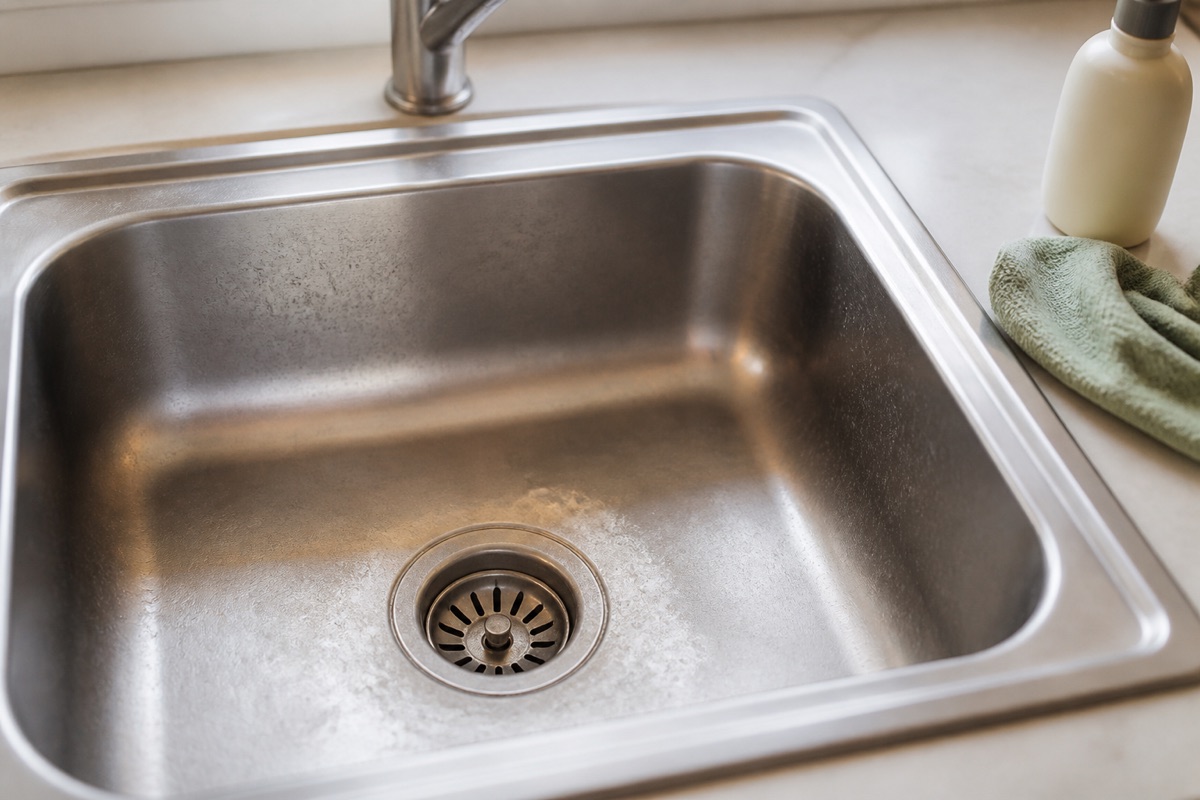
Stainless steel
The most common and the most forgiving, with two characteristic complaints.
Water spots and limescale
Hard water leaves mineral deposits as it dries. The fix is white vinegar on a cloth, left a few minutes, then rinsed and dried. The prevention is drying the sink after use, which is the single habit that keeps stainless looking new.
Scratches and the grain
Stainless has a directional finish. Always clean along the grain, never in circles — circular scrubbing leaves marks that catch the light and never blend in.
Fine scratches are inevitable and eventually merge into a uniform satin patina that most people find acceptable. Deeper individual scratches can be blended with a stainless scratch-removal compound worked strictly along the grain.
Rust spots on stainless
Stainless does not rust, but it picks up rust from other things — a cast iron pan left in the sink, steel wool fragments, a tin can. The deposits sit on the surface and remove with an oxalic-acid cleaner such as Bar Keepers Friend. If left long enough they can pit the surface underneath.
Never leave steel wool in a stainless sink. The fragments embed and rust in place.
What to avoid
- Chlorine bleach — pits stainless. If you use it, rinse immediately and thoroughly
- Steel wool and harsh abrasives
- Leaving acidic or salty food sitting in the bowl
Composite granite and quartz composite
Resin-bound stone particles — the same principle as a quartz worktop, and the same weakness. The resin is what stains and what heat damages.
- Daily: washing-up liquid and a soft cloth, rinsed and dried.
- Chalky white film on a dark sink is limescale, not damage. Diluted vinegar or a descaler removes it. This is the most common composite complaint and people frequently mistake it for the finish failing.
- Stains — tea, coffee, turmeric, red wine — respond to a bicarbonate paste left for an hour, or a dilute bleach solution briefly if the manufacturer allows it. Check first; some composites are damaged by bleach.
- Restore the colour on a dull dark sink with a few drops of olive oil on kitchen paper, buffed over the dry surface. It is cosmetic and temporary, and it works well.
Never put a hot pan straight into a composite sink. The resin binder suffers well below the temperature a pan comes off the hob at, and the damage is permanent.
Ceramic and fireclay
Glazed, non-porous and highly stain-resistant — but brittle.
- Grey metal marks are not scratches. They are metal transferred from pans and cutlery onto the glaze, and they wipe off with a mild cream cleaner or a melamine sponge.
- Chips happen when something heavy is dropped. Repair kits exist and are a cosmetic fix at best. A protective grid mat in the base of the bowl prevents most of it.
- Avoid harsh abrasives, which dull the glaze and then make it stain more readily.
The parts of the sink people forget
- The tap base. Limescale accumulates where the tap meets the surface. Wrap a vinegar-soaked cloth around it for an hour, then work the joint with a soft brush.
- The overflow. A dark, permanently damp cavity that grows biofilm and is a common source of sink smells. Flush it with a funnel and a bicarbonate-and-hot-water solution every few months.
- The waste flange and strainer. Lift out and scrub the underside, which holds a black film.
- The seal around the sink rim. Silicone here goes mouldy and eventually leaks. Renewing it is straightforward and worth doing before the cabinet below suffers.
Common questions
Why does my dark composite sink look chalky?
Limescale film, not damage to the finish. Dark composites show it dramatically because of the contrast. Diluted white vinegar or a proprietary descaler removes it, and drying the sink after use prevents it returning.
Are grey marks on my ceramic sink scratches?
Usually not — they are metal transferred from pans and cutlery onto the glaze. A mild cream cleaner or a melamine sponge takes them off. Actual damage to a glaze is a chip, not a line.
Can I use bleach in a stainless sink?
Only briefly and with a thorough rinse. Chlorine pits stainless steel, and leaving a bleach solution standing in the bowl overnight is a reliable way to mark it permanently.
Why does my sink smell even though it drains fine?
Check the overflow. It is a permanently damp cavity that the water never flushes, and it grows biofilm. Flush it with hot water and bicarbonate through a funnel. If that does not fix it, the trap or a dry seal elsewhere is the next candidate.
Can I put hot pans in the sink?
Not in composite — the resin binder is damaged well below the temperature of a pan off the hob, and it is permanent. Stainless tolerates it. Ceramic tolerates the heat but not the impact.