Sheet Pans, Bakeware and Why Aluminium Warps in the Oven

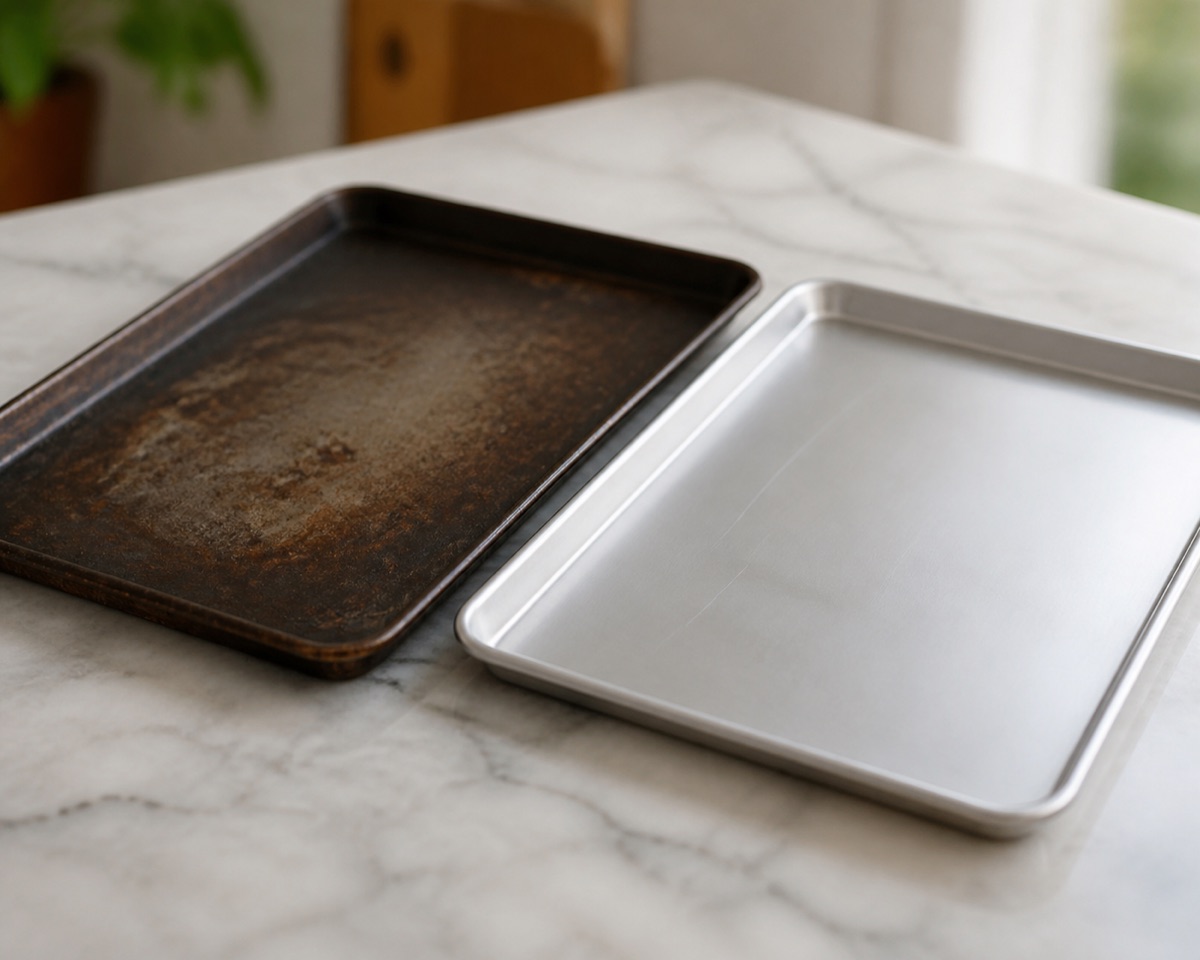
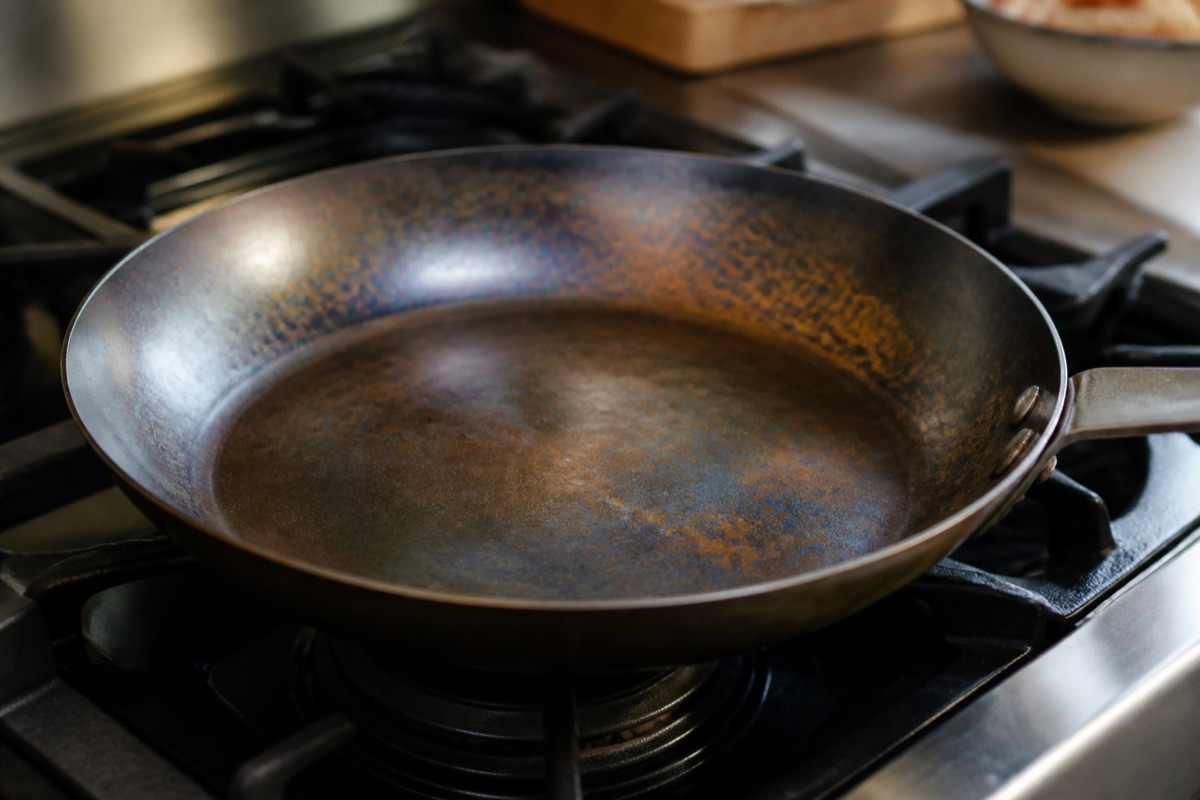
Dark carbon steel baking sheet with visible seasoning beside a lighter aluminium sheet pan

Bakeware fails in ways that look like damage but usually are not. Aluminium sheet pans warp with a bang in a hot oven. Dark steel pans go brown and blotchy. Silicone gets sticky. Each has a cause and most have a fix. Aluminium sheet pans Uncoated aluminium is what commercial kitchens use, and for good … Read more

Stainless Steel Pans: Burnt-On Food, Rainbow Stains and Sticking

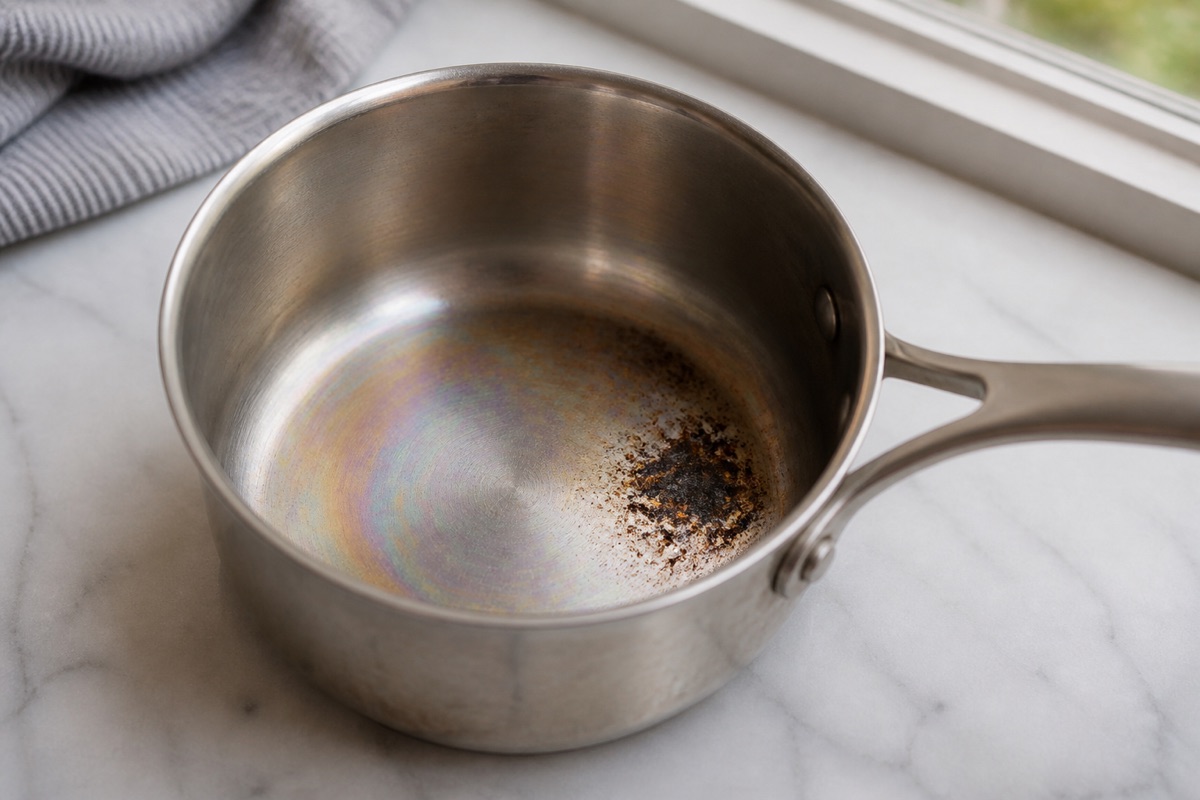
Stainless steel saucepan with faint rainbow heat tint and burnt-on residue on the base interior

Stainless steel is the most forgiving pan material in a kitchen — it takes metal utensils, high heat, acid, the dishwasher and abrasives. Its two complaints, burnt-on food and discolouration, both have straightforward fixes, and neither indicates damage. Burnt-on food: deglaze, do not scrub The fastest method for a pan with food welded to the … Read more

Cast Iron Seasoning: What It Is and How to Build It

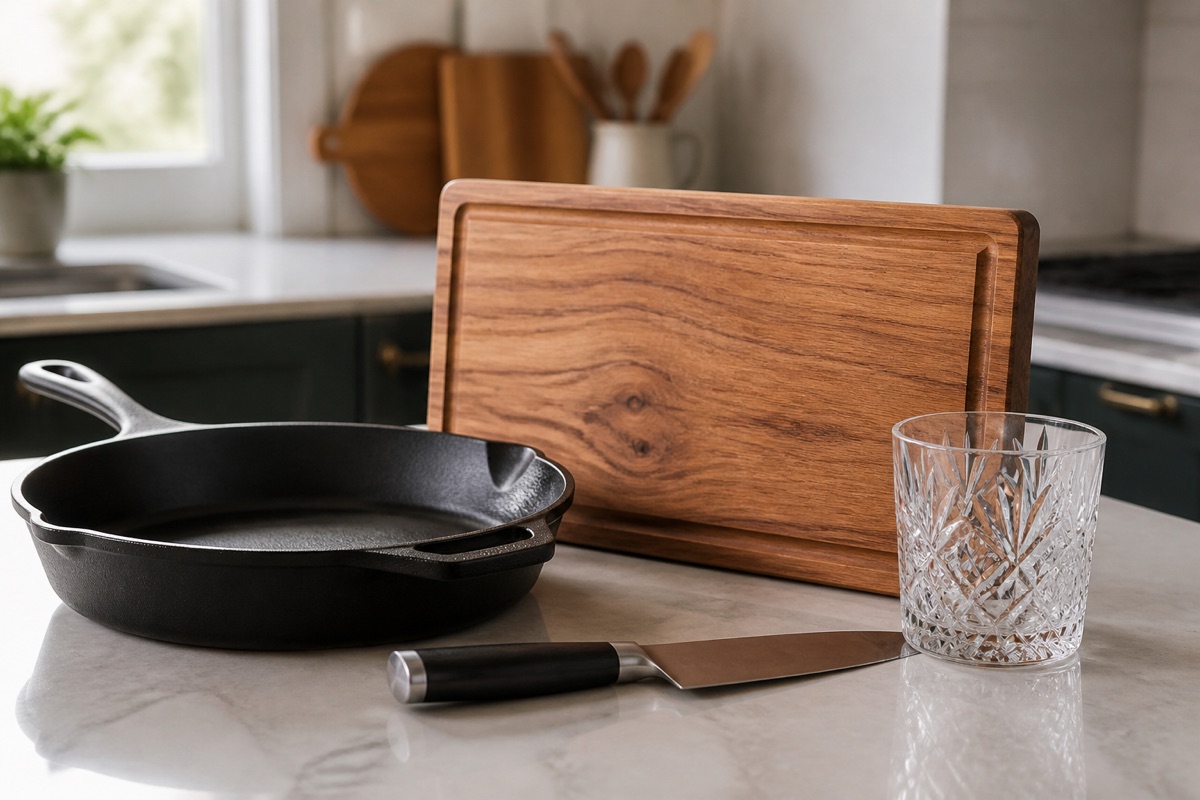
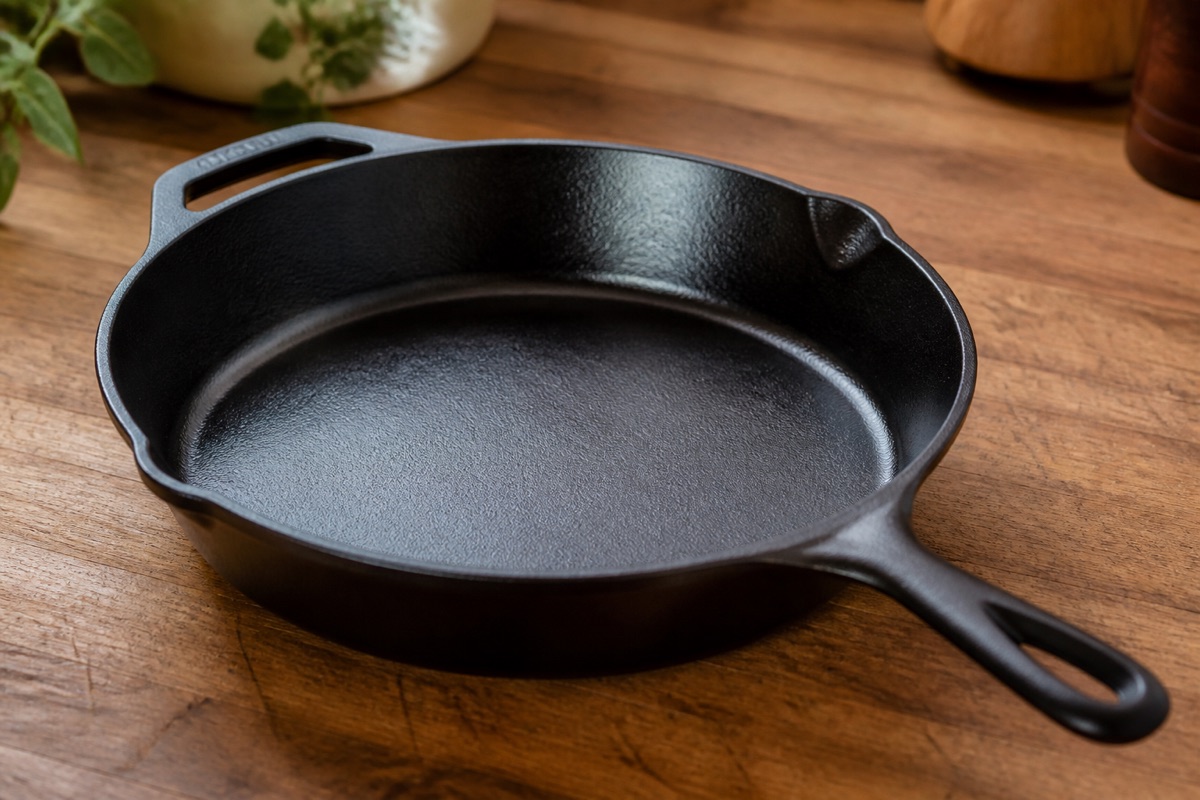
Well-seasoned black cast iron skillet on a wooden worktop with a smooth dark satin cooking surface

Seasoning is not oil sitting on a pan. It is a hard, polymerised layer chemically bonded to the iron — fat that has been heated past its smoke point until it cross-links into a plastic-like film. Understanding that distinction settles most of the arguments about cast iron care. Because seasoning is a bonded polymer rather … Read more

Coffee Grinder Maintenance: Oils, Retention and Burr Wear

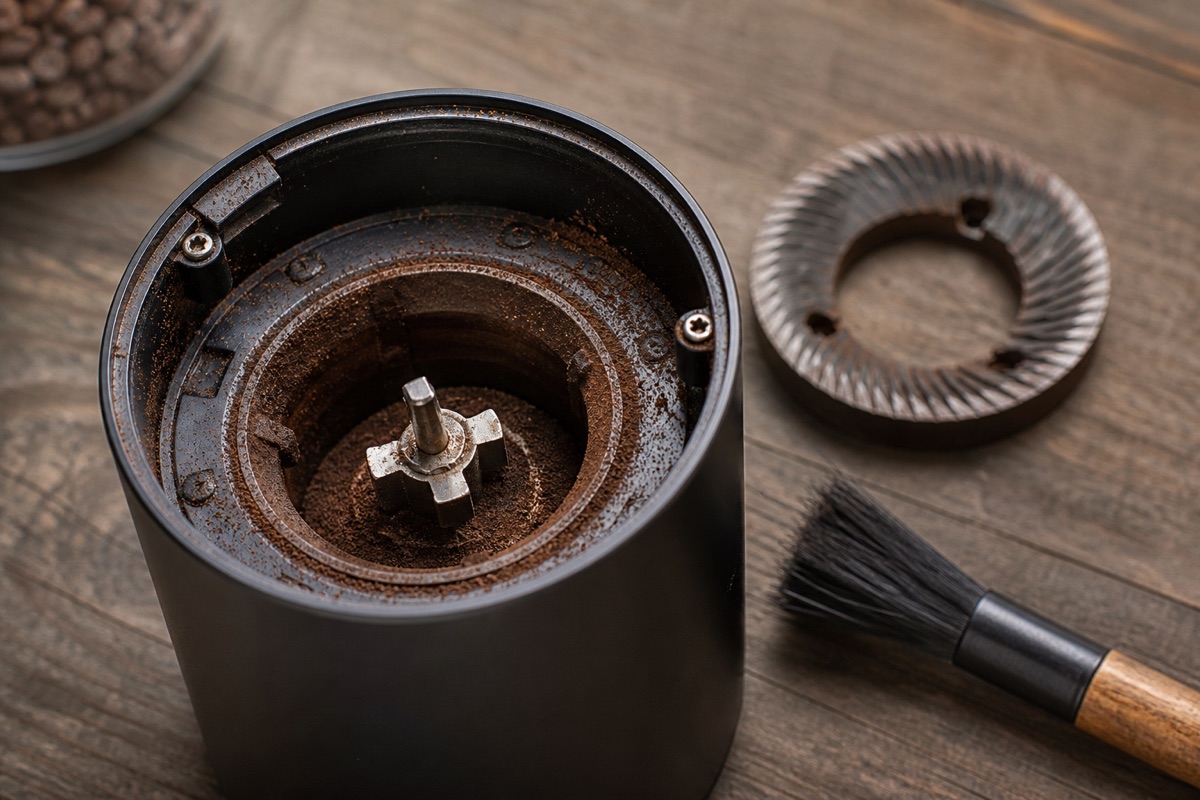
Burr coffee grinder opened up with the top burr removed showing accumulated coffee fines and a brush

A grinder has more effect on coffee than the brewer does, and it is the component most people never clean. Coffee is roughly 15% oil by weight, and that oil coats every internal surface, goes rancid, and taints every subsequent grind. Burr or blade Worth settling first. A blade grinder is a spinning blade that … Read more

What Dishwasher Safe Actually Means

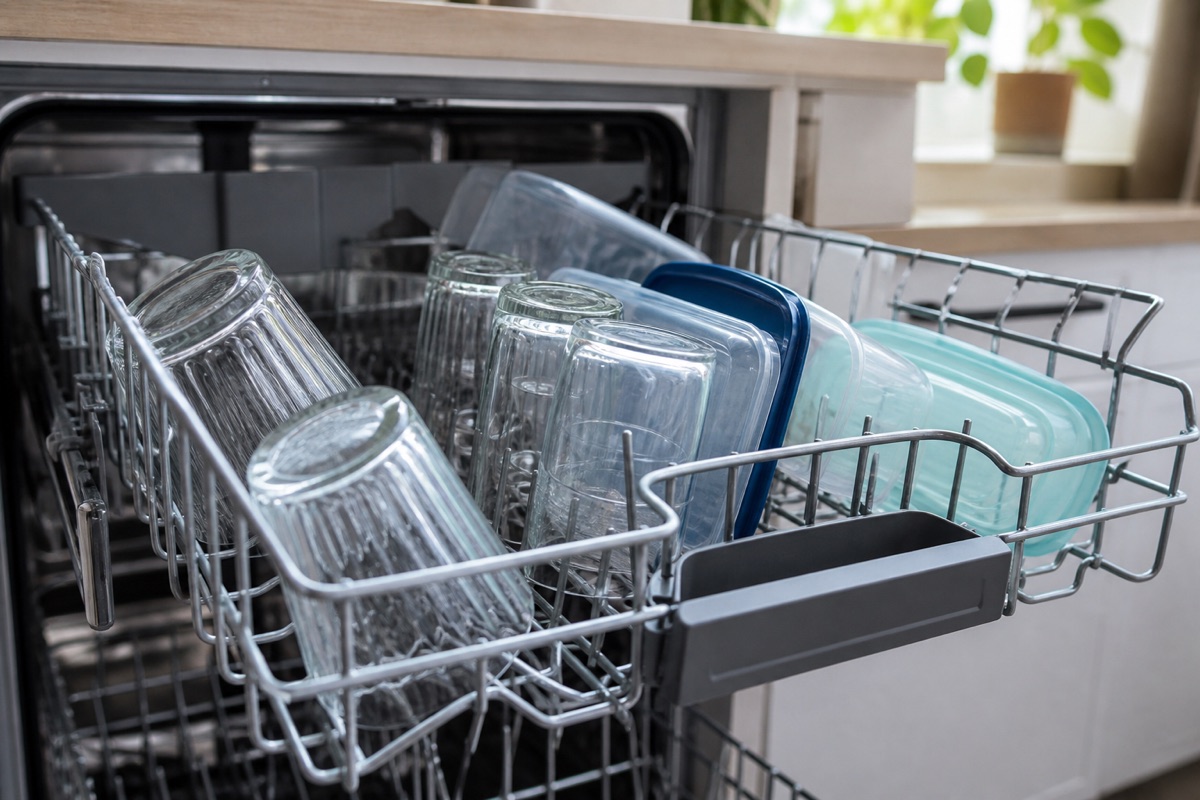
Open dishwasher upper rack loaded with glassware and plastic containers in kitchen daylight

“Dishwasher safe” means the item will not be destroyed by a dishwasher. It does not mean the dishwasher is good for it, and it does not mean it will look the same in five years. Understanding why comes down to what a dishwasher actually does, which is considerably harsher than hand washing: water at 55–75 … Read more

Espresso Machine Cleaning: Backflushing vs Descaling

Espresso machine group head with the portafilter removed and a blind basket and cleaning brush beside it

Espresso equipment fails in taste before it fails mechanically. Rancid coffee oils build up in the group head and the basket, and they contribute a bitter, stale note to every shot long before anything stops working. Most people diagnose this as bad beans. There are two separate maintenance jobs, and they are frequently confused. Backflushing … Read more

What Actually Kills a Non-Stick Pan

Nonstick frying pan on a hob with a wooden spatula resting in it and the coating smooth and intact

Non-stick pans are consumables. Even treated perfectly they have a finite life, and almost everything that shortens that life comes down to one thing: heat. What the coating is, and where its limit sits Most non-stick coatings are PTFE — polytetrafluoroethylene — a fluoropolymer applied in thin layers and cured onto the pan. It is … Read more

Honing vs Sharpening: How to Keep a Kitchen Knife Cutting

Chef knife being drawn across a whetstone at an angle with water pooling on the stone

A knife that will not cut is usually not blunt. It is bent. Distinguishing between the two is the single most useful thing to understand about knife maintenance, because the fixes are entirely different and one of them takes fifteen seconds. Honing versus sharpening A knife edge is extremely thin — a few microns at … Read more

Wooden Cutting Boards: Oiling, Sanitising and Fixing Warps

End-grain wooden chopping board on a counter with a bottle of food-safe mineral oil and a cloth

Wooden boards are better for knives than any plastic or composite alternative, and the research on their hygiene is more favourable than most people assume. What they need is a maintenance routine, and the two things that destroy them — water and the dishwasher — are both about the same underlying problem. Grain direction, and … Read more