The short answer
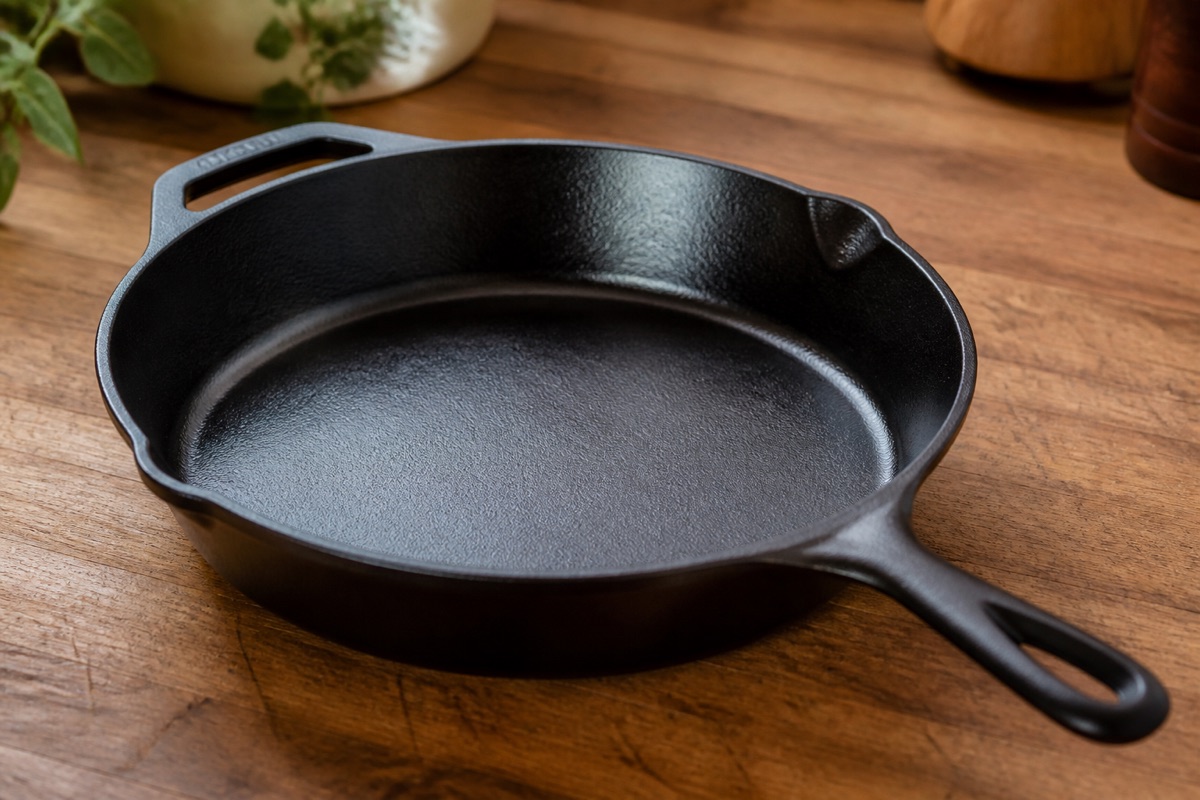
Seasoning is polymerised oil chemically bonded to the iron, not grease sitting on top — which is exactly why modern dish soap is fine on it. Build it in thin layers: apply oil, then wipe it all off until the pan looks dry, and bake upside down at 230 °C for an hour. Repeat three to six times. Almost every failure is too much oil, which stays tacky and flakes. What genuinely strips seasoning is soaking, the dishwasher, and sustained acidic cooking. Rust is recoverable: scrub it off and re-season.
Seasoning is not oil sitting on a pan. It is a hard, polymerised layer chemically bonded to the iron — fat that has been heated past its smoke point until it cross-links into a plastic-like film. Understanding that distinction settles most of the arguments about cast iron care.
Because seasoning is a bonded polymer rather than a coating of grease, it survives soap. It survives scrubbing. What it does not survive is prolonged soaking, strong alkalis, and being left wet.
What seasoning actually is
When a thin layer of fat is heated above its smoke point, the fatty acid chains break and re-form into a cross-linked network that bonds to the iron surface. Each round adds a layer. A well-seasoned pan has many thin layers built up over time, which is why patience matters more than any single technique.
The key word is thin. Thick applications do not polymerise all the way through; they stay tacky, then flake off in patches. Almost every seasoning failure is caused by too much oil.
Seasoning a pan
- Wash it. Hot water, dish soap, a scrubbing brush. On a new pan this removes the factory coating; on a stripped pan it removes debris.
- Dry it completely, then put it on a hob for a minute to drive off the last moisture.
- Apply a thin coat of oil to every surface — inside, outside, handle.
- Wipe it all off. This is the step people skip and it is the most important one. Wipe with a clean cloth until the pan looks dry and barely oiled. The residue left in the metal is enough.
- Bake upside down at 230 °C (450 °F) for one hour, with foil on a lower shelf to catch drips. Upside down prevents pooling.
- Let it cool in the oven.
- Repeat three to six times for a new or stripped pan. Each round is thin; the depth comes from repetition.
Which oil
| Oil | Smoke point | Notes |
|---|---|---|
| Grapeseed | ~215 °C | Excellent. High in polyunsaturates, polymerises readily |
| Canola / rapeseed | ~205 °C | Cheap and works well. The pragmatic default |
| Sunflower | ~225 °C | Good |
| Flaxseed | ~107 °C | Produces a very hard initial layer that is prone to flaking. Popular online, mixed results in practice |
| Olive oil | ~190 °C | Works but low smoke point; can stay tacky |
Everyday care
- Clean while still warm — hot water and a brush or a chainmail scrubber. Residue releases far more easily before it cools.
- Use soap if you want to. Modern dish soap is a mild detergent; it removes food and grease, not polymerised seasoning. The no-soap rule dates from when household soap contained lye.
- Dry immediately and completely. Put it back on a warm hob for a minute. This is the single most important daily habit — cast iron rusts within hours if left wet.
- Wipe with a trace of oil while warm, then wipe most of it back off. A pan stored with visible oil on it goes sticky.
What genuinely damages seasoning
- Soaking or leaving it in the sink — water is the enemy, and time makes it worse
- The dishwasher — prolonged water contact plus strongly alkaline detergent
- Sustained acid cooking — a long tomato braise or a wine reduction will strip a young seasoning. A mature one handles brief acid contact fine
- Oven self-clean cycles — they will strip a pan back to bare metal, which is occasionally what you want
Rust
Rust is a setback, not a write-off. Cast iron is essentially always recoverable.
- Scrub the rust off with steel wool, or a paste of coarse salt and oil for light spots.
- For heavy rust: a 1:1 white vinegar and water soak, but check every 15 minutes and no longer than an hour. Vinegar dissolves rust, and then it starts on the iron.
- Wash, dry completely, and re-season from scratch.
Stripping and starting over
Worth doing when the seasoning is patchy, flaking, or sticky over most of the surface. Options: the oven’s self-clean cycle (most effective, produces a lot of smoke), a lye-based oven cleaner in a sealed bag for 24 hours (effective, requires gloves and eye protection), or an electrolysis tank for restoring antique pans.
Then re-season from bare metal, three to six rounds.
Building it up faster
Cooking is what develops seasoning, more than oven cycles. Shallow-frying, searing and anything that puts a thin film of fat on hot iron adds a layer every time. A pan used several times a week for a year develops a surface that no amount of oven seasoning matches.
Conversely, a pan that only ever simmers liquid will never build seasoning, because nothing is polymerising.
Cooking on it
- Preheat gradually. Cast iron heats slowly and unevenly; give it five minutes on medium. Thermal shock cracks it
- Metal utensils are fine on established seasoning
- It holds heat exceptionally well — turn the heat down earlier than you would with steel
- Never put a hot pan into cold water. This is how cast iron cracks
Common questions
Does soap really destroy seasoning?
No. Seasoning is a polymerised film chemically bonded to the iron, not grease sitting on top, and modern dish soap is a mild detergent that removes food rather than polymer. The no-soap rule dates from when household soap contained lye. What actually damages seasoning is soaking, the dishwasher, and prolonged acid contact.
My pan came out of the oven sticky. What went wrong?
Too much oil. Thick applications do not polymerise all the way through, so the surface stays tacky and later flakes. Wipe the oil off until the pan looks dry before it goes in the oven — the residue left in the metal is enough, and depth comes from repeating thin layers.
Is flaxseed oil the best choice?
It produces a very hard initial layer and it is widely recommended online, but in practice it is prone to flaking off in sheets. Grapeseed or plain rapeseed oil gives a more durable everyday result, and rapeseed is what most people should use.
Can I cook tomatoes in cast iron?
Briefly on a well-established pan. A long acidic braise or a wine reduction will strip a young seasoning, and on any pan it dulls the surface. Use stainless or enamelled cast iron for those, and keep the bare pan for searing and frying.
My pan is rusty. Is it ruined?
Almost never. Scrub the rust off with steel wool, or a paste of coarse salt and oil for light spots. For heavy rust, a 1:1 vinegar and water soak works but check every fifteen minutes and never exceed an hour — vinegar dissolves rust and then starts on the iron. Then wash, dry completely, and re-season.