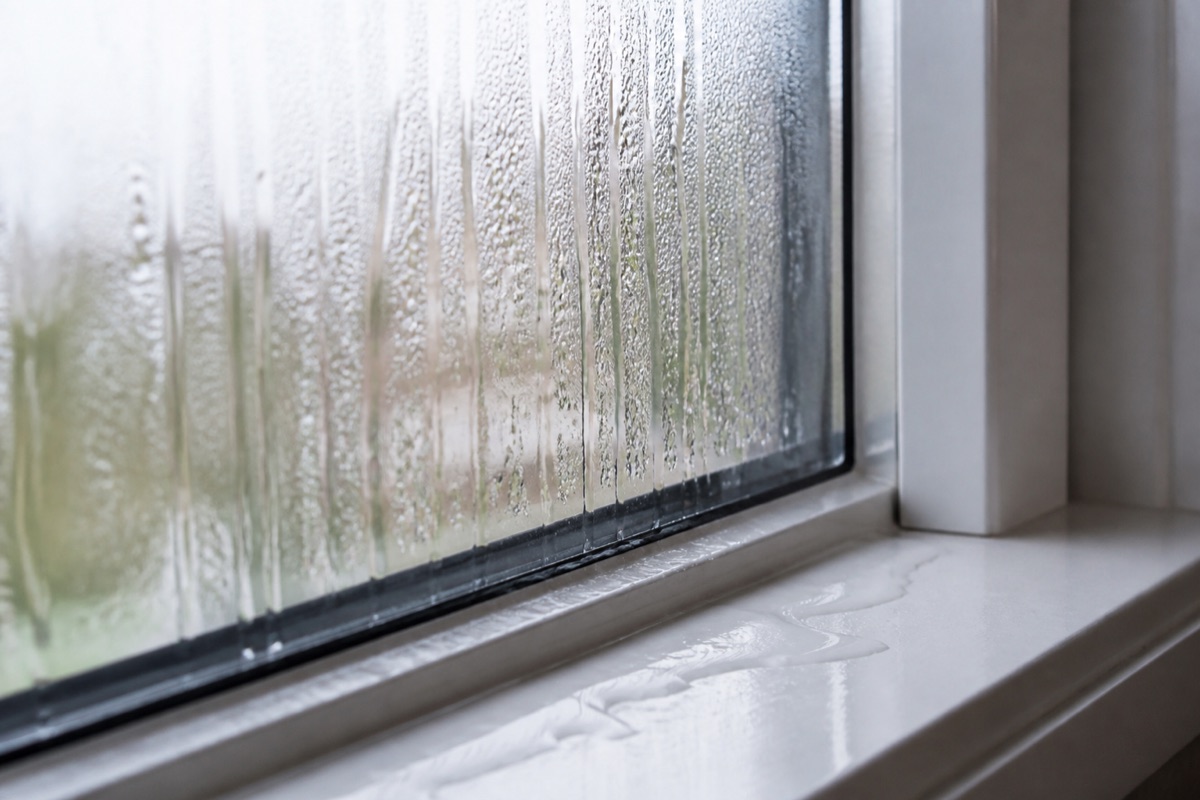
The short answer
Wipe the glass — that one action tells you which of three problems you have. If it clears, the moisture is on the inside: a room humidity and ventilation problem. If it clears from neither side, it is between the panes and the sealed unit has failed, which cannot be cleaned and needs the glazing unit replaced. Condensation on the outside face is not a fault at all; it means very little heat is escaping through the glass. For inside condensation, target 40–60% humidity and ventilate with short sharp airings.
Condensation on a window looks like one problem and is actually three, with completely different causes and completely different fixes. Working out which one you have takes about five seconds, and it determines whether you need to change your habits, replace a sealed unit, or investigate the building fabric.
Identify it first: which side is the water on?
| Where | What it is | Fix |
|---|---|---|
| Inside face of the glass | Room humidity meeting a cold surface | Ventilation, moisture control, warmer glass |
| Between the panes | Failed sealed unit — the seal has gone | Replace the glazing unit |
| Outside face | Dew on cold glass — a sign of good insulation | Nothing. It is not a fault |
Wipe it. If it clears, it is on the inside. If it does not clear from either side, it is between the panes and the unit has failed.
Inside condensation: the common one
Warm air holds more moisture than cold air. When room air touches glass that is below the dew point, it cannot hold what it is carrying and the excess condenses out. Windows are simply the coldest surface in most rooms, which is why they show it first — but the same thing is happening on cold external wall corners and behind furniture, where you cannot see it, and that is where mould starts.
Where the moisture comes from
A household of four generates a surprising volume daily: roughly a litre per person from breathing and perspiration, one to two litres from cooking, half a litre per shower, and one to two litres per load of laundry dried indoors — which is consistently the underestimated one.
The three levers
- Generate less. Lids on pans, extractor fan during and 20 minutes after showering, and laundry dried outdoors or in one ventilated room.
- Ventilate more. Trickle vents open. A short sharp airing — windows wide for five minutes — exchanges the air without cooling the building fabric, which is far more effective than a window on the latch all day.
- Raise the surface temperature. Steady low background heating beats short intense bursts, because it keeps the fabric of the building warm rather than just the air. Thermal blinds and curtains help, but note that heavy curtains drawn tight can make the glass colder and the condensation worse.
Target humidity is 40–60%, toward the lower end in winter. Measure it with a cheap hygrometer rather than guessing — the numbers and the reasoning are in Indoor Humidity Targets.
Between the panes: a failed unit
A double-glazed unit is two panes with a sealed cavity and a desiccant-filled spacer bar that absorbs residual moisture. When the perimeter seal fails, humid air enters, the desiccant saturates, and moisture condenses inside where nothing can reach it.
- It cannot be cleaned. Drilling and drying methods exist and are widely regarded as a temporary cosmetic measure at best.
- Only the glazing unit needs replacing, not the whole window. A glazier measures the unit and fits a new one into the existing frame, which is a fraction of the cost of a new window.
- The insulation value is gone once the seal has failed, so it is not purely cosmetic — that window is now performing closer to single glazing.
Outside condensation: leave it alone
Dew forming on the external face on a clear cold morning means the outer pane is close to outdoor air temperature — which means very little heat is escaping through the glass. It is a sign that the glazing is working well. It clears as the sun comes up and there is nothing to fix.
What to do about the mould that has already appeared
- Fix the ventilation and moisture first, or it returns.
- Clean surface mould with a proprietary mould remover or a dilute chlorine solution — ventilate, wear gloves, and never mix it with any other cleaner.
- Black growth in the sealant around the frame usually cannot be cleaned out; it has grown into the silicone. Cut it out, dry the joint completely, and reseal with a fungicidal sanitary silicone.
Common questions
How do I tell which type of condensation I have?
Wipe the glass. If it clears, it is on the inside — a humidity and ventilation problem. If it clears from neither side, it is between the panes and the sealed unit has failed. Condensation only on the external face is not a fault at all.
Can a misted double-glazed unit be repaired?
Not durably. Drilling and drying treatments are marketed but are cosmetic at best, and the insulation value does not come back. Replacing the glazing unit alone — keeping the existing frame — is the proper fix and costs far less than a new window.
Is condensation on the outside a problem?
The opposite. It means the outer pane is nearly as cold as the outside air, which is what you want — very little heat is passing through. It burns off in the morning sun.
Should I leave a window on the latch all day?
A short sharp airing works better. Five minutes with the window wide exchanges the air without chilling walls and furniture, whereas a window cracked all day cools the building fabric and makes cold surfaces colder, which can worsen condensation elsewhere.
Why is there mould behind my wardrobe but not on the walls elsewhere?
Because that surface is colder and the air there is still. External wall corners and the wall behind furniture are the coldest points in a room, so they reach dew point first. Pull furniture a few centimetres off external walls to let air move behind it.