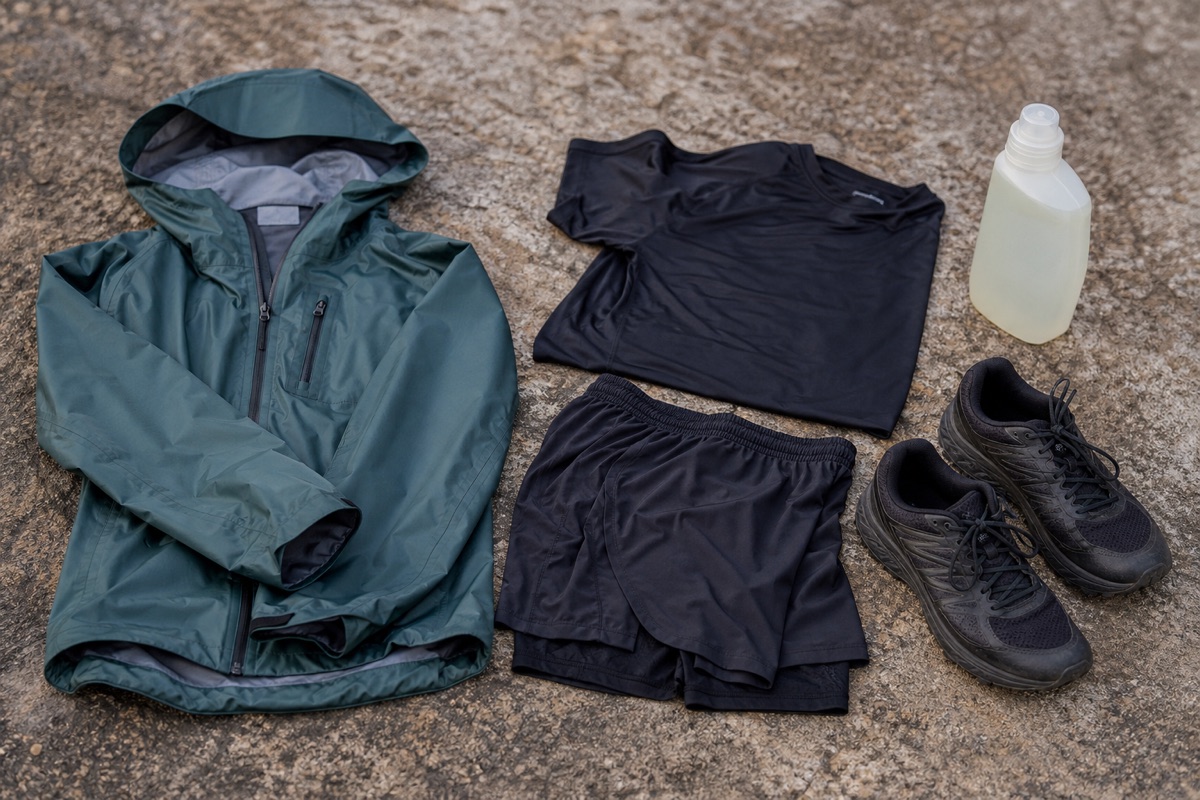
The short answer
Ordinary detergent leaves a residue that blocks the microscopic pores a waterproof membrane breathes through, and it is hydrophilic by design, which directly counteracts water repellency. Use a technical wash instead, and never fabric softener on anything technical. For shells, the step people skip matters most: 20 minutes in a low tumble dryer reactivates the existing DWR and often restores beading with no new proofer. For synthetic base layers, soak in cold water with a cup of white vinegar for 30 minutes before washing, and never tumble dry them.
Technical fabrics fail from being washed the way ordinary clothes are washed. Waterproof shells stop repelling water, base layers start smelling within minutes of a run, and both problems are usually caused by the same thing: detergent residue and fabric softener sitting in the fibres.
Why ordinary detergent is wrong here
Standard laundry detergent contains optical brighteners, softening agents and surfactants designed to leave the fabric feeling conditioned. On cotton that is fine. On technical fabric it is a problem in three ways:
- Residue blocks breathability. Membranes such as Gore-Tex work by letting water vapour through microscopic pores. A surfactant film across those pores stops the vapour transfer and the jacket feels clammy from the inside.
- Surfactants attract water. The residue is hydrophilic by design, which directly counteracts the water-repellent finish on the outer face.
- Residue holds body oils. On synthetic base layers this is what causes the smell that reappears the moment you sweat.
Fabric softener is worse than detergent on every count. It coats fibres deliberately, kills wicking, and seals oils in. Never use it on anything technical.
Waterproof shells
Counter-intuitively, a waterproof jacket needs washing more often than people think. Dirt and body oils on the face fabric are what make it wet out.
- Close all zips, fasten storm flaps, loosen drawcords.
- Use a technical wash — Nikwax Tech Wash, Grangers Performance Wash or equivalent. Not detergent, not softener.
- Clean the detergent drawer first if you normally use ordinary detergent — residue in the dispenser defeats the point.
- Warm gentle cycle, usually 30 °C, with an extra rinse.
- Tumble dry on low for 20 minutes if the label allows. Heat is what reactivates the existing DWR finish, and this step alone often restores repellency.
Re-proofing
Test first: sprinkle water on the outer face. If it beads and rolls, the DWR is intact. If it soaks in and darkens the fabric, it needs re-proofing.
Wash-in proofers are easier; spray-on proofers only treat the outer face, which is what you want on a jacket with a breathable lining. Either way, apply heat afterwards — low tumble dry or a cool iron through a cloth — because most DWR treatments need it to cure.
Base layers and sportswear
The problem here is oil, not dirt.
- Wash immediately. Kit left damp in a bag for a day is far harder to rescue than kit washed the same evening.
- Soak in cold water with a cup of white vinegar for 30 minutes before washing. This is the single most effective step for kit that already smells.
- Wash inside out at 30 °C with a sports detergent.
- Never tumble dry. Heat bakes residual oils into the fibre and destroys elastane recovery.
- Never use softener.
For kit that has become genuinely rank, an enzyme presoak for a few hours breaks down the organic residue that vinegar alone will not shift. More on the mechanism in Removing Odours That Survive the Wash.
Down and synthetic insulation
Insulated jackets follow their own rules and the drying is the critical part — covered in full in How to Wash a Down Jacket. In short: down-specific wash, extra rinses, low heat, dryer balls, and far more drying time than seems reasonable.
Merino wool
Merino base layers are wool, and wool rules apply: cool water, wool detergent, no enzymes, no tumble drying, dry flat. Merino also needs washing far less often than synthetic — airing overnight handles most of it. See How to Wash Wool Without Shrinking It.
Quick reference
| Item | Detergent | Temp | Dryer |
|---|---|---|---|
| Waterproof shell | Technical wash | 30 °C | Low, 20 min — reactivates DWR |
| Synthetic base layer | Sports detergent | 30 °C | No |
| Merino base layer | Wool detergent | 30 °C, wool cycle | No — dry flat |
| Down insulation | Down wash | 30 °C | Low, with dryer balls |
| Fleece | Mild detergent | 30 °C | Low or air dry |
Common questions
Why does my waterproof jacket wet out even though it does not leak?
The membrane is still working; the outer face fabric has lost its DWR finish, so it absorbs water instead of shedding it. The jacket then feels wet and clammy because a saturated face fabric cannot pass vapour outward. Wash it, tumble dry low, and re-proof if water still soaks in.
Can I use normal detergent just once?
You can, and one wash will not destroy a jacket, but residue accumulates and each ordinary wash undoes some repellency. If it is all you have, use half the normal dose and run two extra rinses, then re-proof.
Is tumble drying really necessary for a shell?
It is the step most people skip and it matters. Gentle heat reactivates the existing DWR, which often restores beading without any new proofer at all. Twenty minutes on low, if the care label permits it.
Why does my running kit smell straight away even after washing?
Body oils bonded into the synthetic fibre, which ordinary detergent does not remove — the smell is dormant until warmth and moisture reactivate the bacteria feeding on them. A cold vinegar soak before washing is the most effective fix, and never tumble dry synthetics.
Does fabric softener really matter that much?
On technical fabric, yes. It works by depositing a waxy coating, which is precisely what destroys wicking in base layers and repellency in shells, and it seals existing oils in. There is no version of this where softener helps.