The short answer
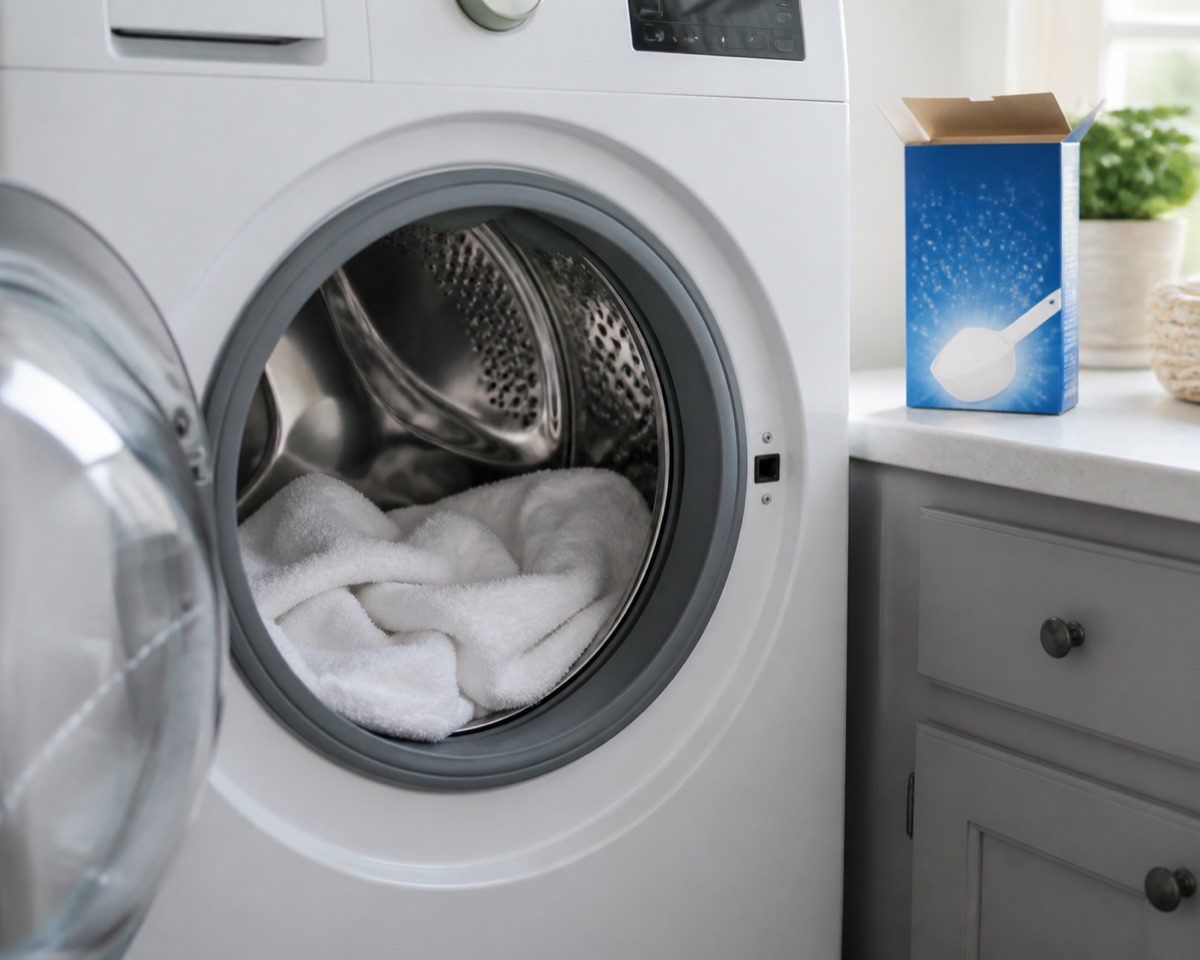
Three different odour problems need three different fixes. If the whole load smells musty, the machine has a biofilm: clean the gasket, the drain pump filter and the dispenser, then run a hot maintenance cycle. Sour towels are holding detergent and softener residue: strip them with two detergent-free washes at the hottest safe temperature. Activewear that smells the moment you sweat has body oils bonded into synthetic fibre: soak in cold water with a cup of white vinegar for 30 minutes before washing, and never tumble dry it.
Some smells survive washing. Gym kit that smells fine out of the machine and reeks twenty minutes into a workout, towels that go sour within a day, a musty note in a whole load — these are not cleaning failures in the ordinary sense. They are three specific problems, and each needs a different fix.
Diagnose it first
| Smell | Cause |
|---|---|
| Musty, damp, “wet dog”, affects the whole load | The machine, or laundry left wet |
| Sour or mildewy, worst on towels | Detergent and softener residue holding bacteria |
| Body odour that returns as soon as you sweat | Oils bonded into synthetic fibres |
| Ammonia sharpness in workout kit | Bacterial breakdown of sweat in the fabric |
| Smoke, cooking, damp storage | Absorbed volatile compounds |
1. If the whole load smells, it is the machine
A washing machine that has developed a biofilm transfers that smell to everything it washes, and no amount of detergent fixes it. Deal with the machine first — everything else is wasted effort until you do.
- Clean the door gasket. On a front-loader this is nearly always where it lives. Fold the rubber back and clean the channel thoroughly.
- Clean the drain pump filter. Behind the panel at the bottom front. It holds standing water permanently, and on a machine that has never had it done it is often the source.
- Pull and wash the dispenser drawer and the cavity it sits in.
- Run a hot maintenance cycle — the Tub Clean programme, or the hottest cycle available, empty, with a machine cleaner or the dose of bleach the manual specifies.
- Leave the door and drawer ajar between washes from now on.
2. Sour towels: strip the residue
Towels go sour because detergent and fabric softener build up in the fibres, and that residue holds moisture and feeds bacteria. Adding more detergent — the instinctive response — makes it worse.
The strip wash
- Wash the towels with no detergent at all, on the hottest cycle the label allows.
- Repeat. The water will often look grey, which is the residue leaving.
- Then wash with half a cup of white vinegar in the fabric softener compartment and no detergent.
- Finally, wash normally with a reduced dose of detergent and no softener.
Then stop using fabric softener on towels permanently. Softener works by coating fibres in a waxy layer, which is precisely the opposite of what a towel needs — it reduces absorbency measurably, and the coating is what holds the smell.
3. Activewear: the oils have bonded to the fibre
Polyester and nylon are oleophilic — they attract and hold oil. Body oils bond into the fibre in a way that ordinary detergent, which is designed for water-soluble soil, does not remove. The smell is dormant until warmth and moisture reactivate the bacteria feeding on those oils.
What works
- Wash immediately. Do not leave kit in a bag. The single biggest factor.
- Soak in white vinegar — one cup in a basin of cold water, 30 minutes — before washing. This is the most effective single step.
- Use a sport-specific detergent designed to lift oils from synthetics.
- Never use fabric softener on activewear. It coats the fibre, seals the oils in, and destroys wicking.
- Wash inside out — the soiled surface faces the water.
- Do not tumble dry. Heat bakes residual oils into the fibre and degrades elastane.
For kit that is already badly affected, an enzyme presoak — an enzyme detergent in cool water for a few hours — breaks down the organic residue that vinegar alone will not shift.
The additives, and what each actually does
| Additive | Use for | Notes |
|---|---|---|
| White vinegar | Residue, mustiness, activewear | In the rinse. Never with chlorine bleach |
| Bicarbonate of soda | General odour, mild | Half a cup with the detergent |
| Oxygen bleach | Mildew, organic staining | Colour-safe. Not on wool or silk |
| Enzyme detergent | Protein and body soil | Not on wool or silk — enzymes digest protein |
| Borax | General deodorising | Boosts detergent in hard water |
| Chlorine bleach | Last resort on whites | Weakens fibres. Never mix with anything |
Smoke and long-term storage smells
These are absorbed volatiles rather than bacterial, and they respond to different treatment:
- Air outdoors first, ideally in sun and wind, for a full day. This alone removes a surprising amount.
- Soak in bicarbonate solution — a cup in a basin of warm water — for several hours.
- Wash with a cup of white vinegar in the rinse.
- Repeat. Heavy smoke exposure usually needs two or three cycles, and some items never fully clear.
Preventing all of it
- Move wet laundry out of the machine within an hour
- Use less detergent, not more
- Drop fabric softener entirely on towels and activewear
- Run one hot wash a week to keep the machine’s biofilm from establishing
- Leave the door and dispenser ajar
- Dry everything completely before folding — a slightly damp towel in a stack contaminates the stack
Common questions
Everything from the machine smells musty. Where do I start?
The machine, not the laundry. Clean the door gasket, the drain pump filter and the dispenser drawer, then run a hot maintenance cycle. Until the machine’s biofilm is dealt with, every wash re-contaminates the load and no detergent change will help.
Why does my gym kit smell fine until I start sweating?
Polyester and nylon are oleophilic — they hold body oils that ordinary detergent, designed for water-soluble soil, does not remove. The smell is dormant until warmth and moisture reactivate the bacteria feeding on those oils. A cold vinegar soak before washing is the most effective single fix.
Does adding more detergent help with odour?
It makes it worse. Residue holds moisture and feeds the bacteria producing the smell, so the instinctive response compounds the problem. Use less, and strip the existing residue with detergent-free hot washes.
Can I mix vinegar and bleach if I use them in different compartments?
No. They will meet in the drum, and acid plus chlorine bleach releases chlorine gas. Use one or the other in a given wash, and rinse thoroughly between if you want to switch.
How do I get smoke smell out of clothes?
Air them outdoors first, ideally in sun and wind, for a full day — that alone removes a surprising amount. Then a bicarbonate soak for several hours, then a wash with vinegar in the rinse. Heavy exposure usually needs two or three rounds and some items never fully clear.