The short answer
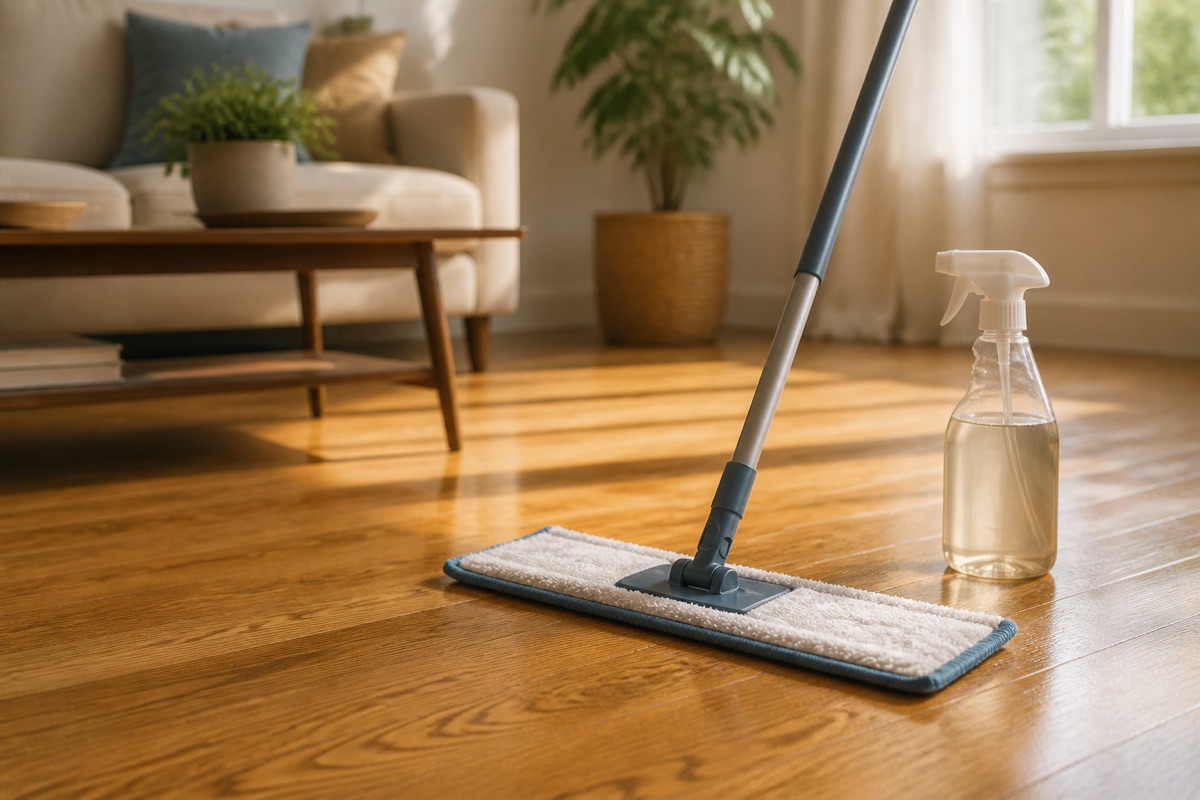
Grit causes most wood floor wear, not walking, so dry cleaning two or three times a week matters more than mopping. When you do damp clean, the floor should be dry within a minute of the mop passing — use a pH-neutral wood cleaner sprayed onto the mop head, never a bucket. Never use a steam mop, vinegar, oil soap or wax on a surface-finished floor. Recoat while the finish is still intact: once wear reaches bare wood, only a full sand and refinish will fix it.
Wood floors are damaged far more often by cleaning than by use. The mechanisms are consistent: too much water, the wrong chemistry, and grit left on the surface long enough to be walked into it.
Everything below assumes a surface-finished floor — polyurethane, lacquer, or a factory aluminium-oxide finish, which covers the large majority of wood floors installed in the last thirty years. If you do not know what you have, test it first; oiled and waxed floors need a different routine.
Grit is the actual enemy
Almost all visible wear on a wood floor is abrasion. Sand, grit and small stones tracked in on shoes act like sandpaper under foot traffic, and they cut through the finish in the paths people walk. Nothing you do afterwards matters as much as removing that grit before it gets ground in.
- Dry clean two to three times a week in traffic areas, daily in a busy hallway.
- Use a microfibre dust mop, or a vacuum with a hard-floor setting where the beater bar switches off. A rotating brush bar on a wood floor is an abrasive tool.
- Check the vacuum’s wheels and base plate for embedded grit — a vacuum can scratch a floor it is supposed to be cleaning.
- Put a coarse mat outside and an absorbent one inside every external door. This single measure removes most of what would otherwise come in.
Damp cleaning, done correctly
The rule is simple and it is the one people break: the floor should be dry within a minute of the mop passing over it. If you can see a wet sheen that lingers, you have used too much water.
- Dry clean first. Damp mopping over grit just makes abrasive slurry.
- Use a pH-neutral cleaner formulated for wood floors, at the dilution on the bottle.
- Spray onto the mop head or lightly onto a small section of floor — not a bucket poured out.
- Use a flat microfibre mop, wrung out thoroughly. Work with the grain, in manageable sections.
- Rinse or swap the pad as it loads with dirt. A saturated grey pad is redistributing, not cleaning.
Frequency: every one to two weeks in living areas, weekly in a kitchen.
What never to use
| Product | What it does |
|---|---|
| Steam mop | Drives heat and moisture into joints; lifts or clouds the finish. Voids most warranties |
| Vinegar or lemon | Acid dulls polyurethane cumulatively and irreversibly |
| Oil soap | Leaves a residue that hazes and blocks any future recoat |
| Wax on a sealed floor | Slippery, streaky, and must be stripped before refinishing |
| Ammonia or all-purpose cleaner | Alkaline; degrades the finish |
| A soaking string mop | Water into the joints; cupping and gapping |
Spills
Blot immediately, do not wipe — wiping spreads a spill into more joints. Water sitting on a floor for a few minutes is harmless on an intact finish. Water sitting for hours reaches the joints, and the board edges swell into a raised profile that only sanding will remove.
Pet accidents need speed and enzymes: urine penetrates through the joints into the subfloor and the odour outlasts anything a surface cleaner can reach. An enzymatic pet cleaner is the only thing that addresses the source.
Marks and what actually removes them
| Mark | Treatment |
|---|---|
| Scuffs from shoes | Rub with a clean tennis ball or a melamine sponge used dry and gently |
| Sticky residue | Ice in a bag to harden it, then lift with a plastic scraper |
| White cloudy rings | Moisture trapped in the finish. Often lifts with gentle warmth from a hair dryer |
| Dark spots | Water has reached the wood. Surface cleaning will not fix it; this needs refinishing |
| Fine surface scratches | A matching wax repair stick, or a recoat if widespread |
The prevention that matters most
- Felt pads under every piece of furniture that moves, checked twice a year. Pads collect grit and become abrasive discs; a pad you have never inspected is doing damage.
- Lift furniture, never drag it.
- Rugs in traffic lanes, with a breathable rug pad — not rubber-backed, which traps moisture and can discolour the finish.
- Keep humidity between 35% and 55%. Wood moves with moisture: too dry and boards shrink and gap in winter; too damp and they cup. A humidifier or dehumidifier does more for a wood floor than any cleaning product.
- Trim pet claws, and keep stiletto heels off the floor — a heel concentrates enormous pressure on a point.
- Block direct sun with blinds or UV film. All wood changes colour with light, and a rug left in one place for two years leaves a permanent outline.
Recoating before it is too late
A surface-finished floor is designed to have its finish renewed periodically — a screen-and-recoat, where the existing film is abraded and a fresh coat applied. It takes a day, costs a fraction of a full refinish, and it works only while the finish is still intact.
Once traffic has worn through to bare wood, dirt gets into the grain and the only remaining option is sanding back. Watch the traffic lanes: when the sheen there is noticeably duller than the edges of the room, that is the moment to recoat, not later.
Common questions
Is a steam mop ever safe on wood?
No. Steam drives heat and moisture into the joints — it can lift or cloud a surface finish and will strip an oiled or waxed one. Essentially every wood flooring manufacturer voids the warranty for steam cleaning, which tells you how they view it.
Why is vinegar such a common recommendation if it is wrong?
Because it works on many surfaces and the damage on wood is cumulative rather than immediate. Acetic acid dulls a polyurethane film gradually over repeated use, so nobody connects the dull floor two years later to the cleaner they have been using all along.
How wet should the mop be?
The floor should be dry within a minute of the mop passing over it. If you can see a wet sheen that lingers, you have used too much water. Spray onto the mop head or lightly onto a small section rather than pouring from a bucket.
What causes the dark spots that will not clean off?
Water that has reached the wood through a breach in the finish. Surface cleaning cannot fix it because the discolouration is in the timber, not on it. That area needs sanding and refinishing.
When should I recoat rather than wait?
When the traffic lanes look noticeably duller than the edges of the room. A screen-and-recoat works only while the finish is still intact — once wear reaches bare wood, dirt gets into the grain and the only option left is a full sand and refinish, at several times the cost.