The short answer
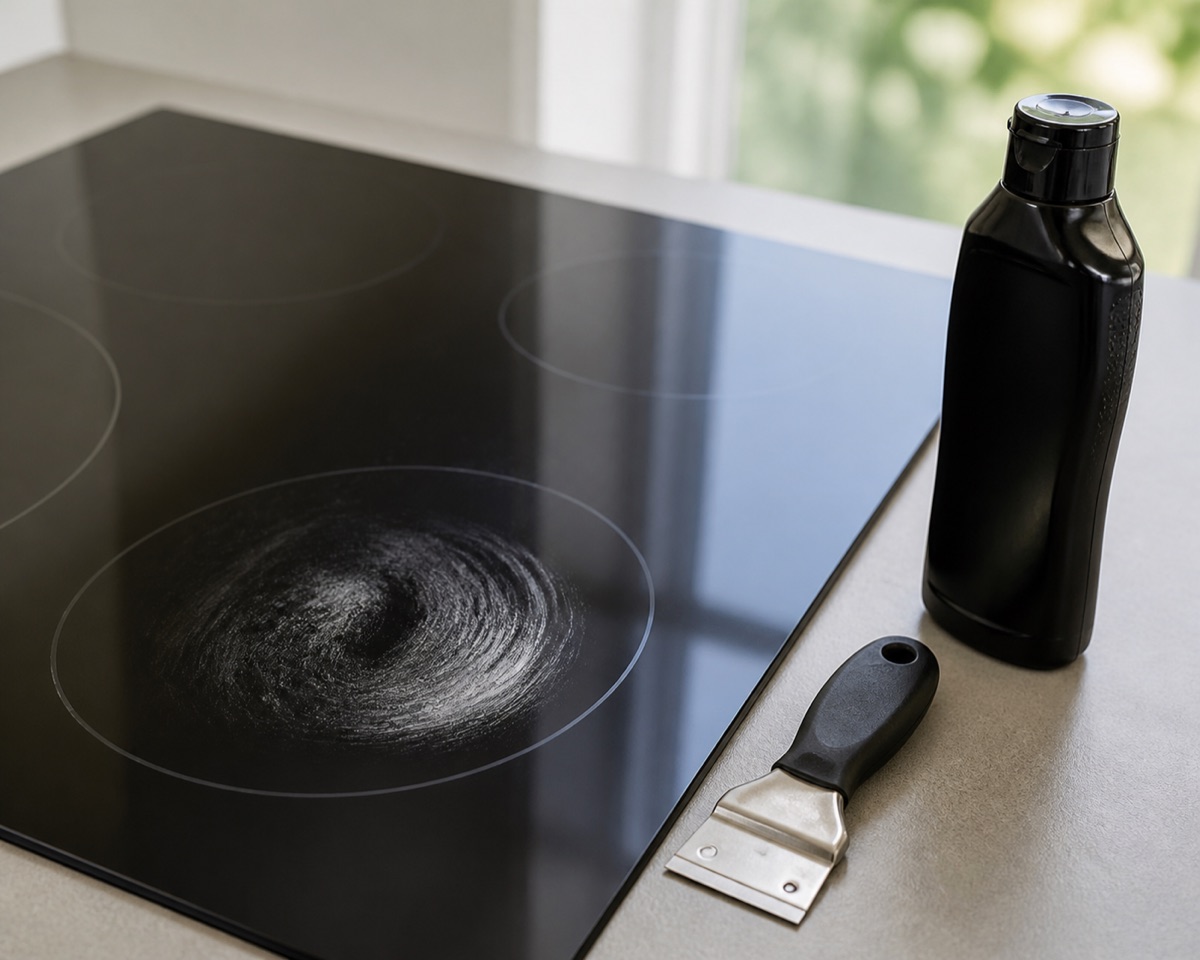
Induction glass is easy to clean and easy to scratch, and one spill is genuinely an emergency: molten sugar bonds chemically with glass-ceramic and cannot be removed afterwards without taking surface material with it — scrape it off while hot. For everything else, wipe while the surface is still warm, and use a ceramic hob scraper held at about 30 degrees for baked-on residue, which is gentler on the glass than any scouring pad. Lift pans rather than sliding them, especially cast iron, and check bases for grit before every use.
An induction hob is a sheet of glass-ceramic with coils underneath. Nothing gets hot except the pan, which makes it the easiest hob surface to keep clean — and the easiest to permanently scratch, because people treat glass like enamel.
Why induction is different from ceramic
Both look like a black glass slab. The difference is what heats.
On a radiant ceramic hob the element under the glass glows and the glass itself gets extremely hot, so spills bake onto it immediately. On induction, a magnetic field heats the pan directly and the glass only warms by contact. That means spills have a much better chance of wiping off before they carbonise — if you get to them.
The care rules below apply to both, but induction is more forgiving of everything except abrasion.
Everyday cleaning
- Wipe spills while the surface is still warm — not hot enough to burn, but warm enough that residue has not set. This is the single habit that prevents most work.
- For daily cleaning, a damp microfibre cloth and a drop of washing-up liquid handles it.
- Dry with a clean cloth. Air-drying leaves water marks, especially in hard water.
Baked-on residue
Use a ceramic hob scraper — a razor blade in a plastic holder, sold for exactly this. Hold it at a shallow angle, roughly 30 degrees, and push. It is designed to slide under the deposit without touching the glass. This is the correct tool and it is safer for the surface than any scouring pad.
Follow with a purpose-made ceramic hob cream, worked in with kitchen paper and buffed off. Those creams contain a mild polish that also fills micro-scratches and restores the sheen.
What damages the surface
| Cause | Result |
|---|---|
| Sugar spills left to cool | Molten sugar bonds to and pits the glass. Permanent |
| Dragging pans | Fine circular scratches, especially from cast iron |
| Grit under a pan base | Scratches on the first move |
| Scouring pads and cream cleaners | Dulls the surface permanently |
| Rough or damaged pan bases | Progressive scratching |
| Heavy impact | Cracks — glass-ceramic is hard but brittle |
Sugar is the emergency
Anything sugary — jam, syrup, a boiled-over sweet sauce — must come off while it is still hot. Molten sugar reacts with the glass-ceramic and cools into a bond that cannot be removed without taking surface material with it. Use the scraper immediately, with an oven glove on. This is the one spill worth interrupting cooking for.
Lifting, not sliding
Cast iron in particular has a base that is rough at a microscopic level, and sliding it across glass leaves marks. Lift pans on and off. If you use cast iron regularly on induction, check the base for burrs and smooth them with fine abrasive paper on a flat surface.
Pans that work, and pans that mark
Induction needs a ferromagnetic base — the fridge magnet test settles it. Beyond that:
- Flat bases matter. A warped base contacts the glass on a rim and both heats unevenly and concentrates wear on that ring.
- Base diameter should roughly match the zone. Too small and the hob may not detect it; too large and the overhang stays cold.
- Check the base for grit before every use — it takes a second and prevents most scratching.
Error codes and behaviour that looks like a fault
- Clicking or buzzing — normal, particularly with multi-ply pans, and louder at high power. It is the magnetic field acting on layers in the pan base.
- Fan running after you switch off — normal. The electronics under the glass need cooling.
- Zone cuts out at high power — usually thermal protection, often because ventilation underneath is obstructed.
- Pan not detected — non-magnetic base, or base too small for the zone.
Common questions
Can I use a razor scraper on the glass?
Yes — a ceramic hob scraper is the correct tool, held at about 30 degrees. It slides under deposits without abrading the surface, which is more than can be said for a scouring pad. Keep the blade sharp; a blunt one skids.
Why is sugar treated as an emergency?
Molten sugar chemically bonds with glass-ceramic and cools into a joint that cannot be separated without removing surface material. Every other spill can wait; this one cannot. Scrape it while hot, wearing an oven glove.
Is it safe to use cast iron on induction?
Yes, and it works very well — but lift it rather than sliding, and check the base for burrs. Cast iron bases are rough at a microscopic level and dragging one across the glass is the fastest way to scratch it.
My hob buzzes with certain pans. Is something wrong?
No. Multi-ply pans have layers of different metals, and the magnetic field makes them vibrate slightly against each other. It is more noticeable at high power and with lighter pans. Heavier, single-material bases are quieter.
Can scratches be removed?
Fine surface marks often improve considerably with a ceramic hob cream, which contains a mild polish. Anything you can catch a fingernail in is into the glass and is permanent. Prevention — lifting pans and checking bases — is the whole strategy.