The short answer
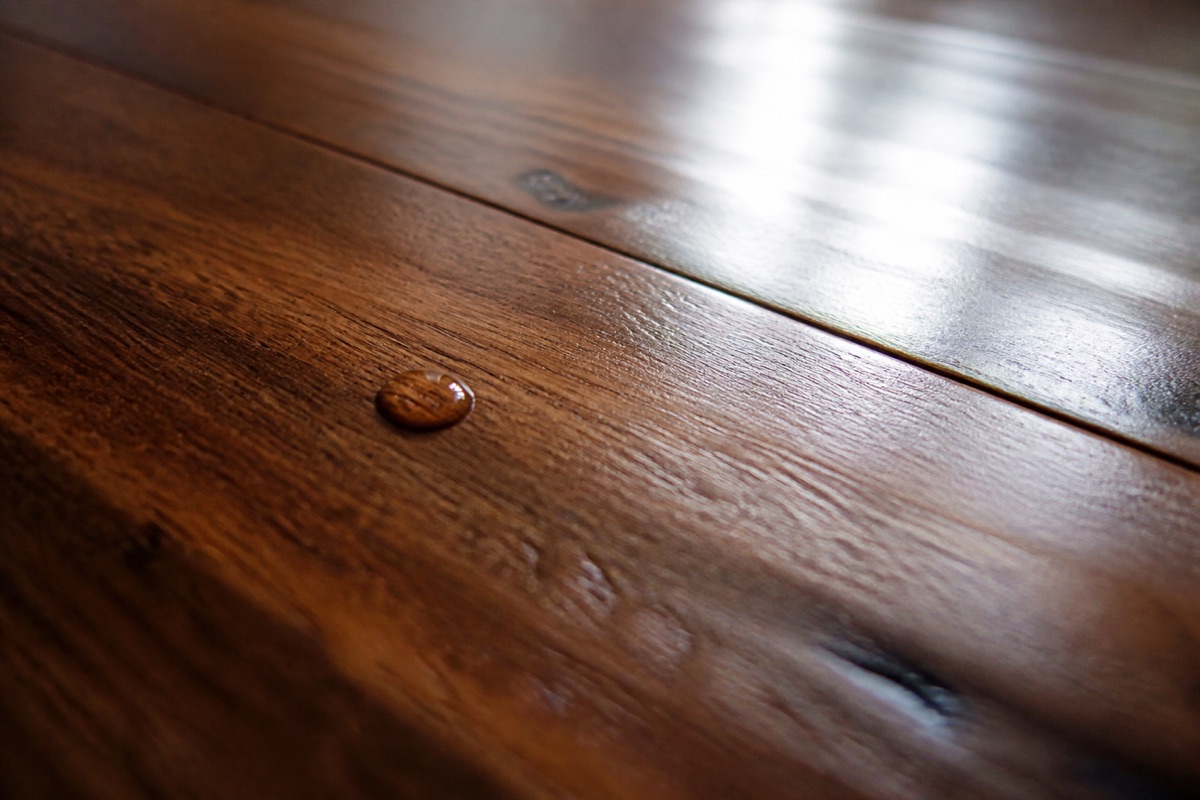
Three tests tell you what you have in two minutes. Water beading on the surface means an intact surface finish such as polyurethane; water soaking in and darkening the wood means a penetrating oil or wax, or a worn-through finish. A fingernail dragged in a hidden corner that leaves a smear you can buff away means wax. Mineral spirits on a cloth that lifts colour means oil or wax; nothing transferring means a surface finish. That single answer determines every cleaning product you should buy.
Almost every serious mistake made on a wood floor comes from cleaning it as though it had a different finish. A product that is correct for oil is wrong for polyurethane. A method that is fine for polyurethane will strip a wax floor. Before you buy a cleaner, spend two minutes finding out what you are standing on.
The two families
Wood floor finishes divide into two categories, and the distinction is physical rather than cosmetic:
- Surface finishes sit on top of the wood as a film. Polyurethane, water-based lacquer, aluminium-oxide factory finishes, and older varnishes. The wood is sealed; you are cleaning plastic, not timber.
- Penetrating finishes soak into the wood and cure inside it. Hardwax oil, tung and linseed oil, and traditional wax. The surface is wood, protected from within.
Everything else follows from which of those you have.
Three tests, in order
1. The water bead test
Put a few drops of water in an inconspicuous spot. Wait five minutes.
- Water sits in a tight bead, wipes away leaving nothing — an intact surface finish.
- Water spreads out and darkens the wood — a penetrating finish, or a surface finish that has worn through.
Wipe it up either way. Do not leave it to find out how bad it is.
2. The fingernail test
In a hidden corner, press a fingernail into the surface at an angle and drag it slightly.
- A visible smear that buffs away with a thumb — wax.
- Nothing happens — a surface finish or hardwax oil.
3. The solvent test
In a closet or under a radiator, rub a spot with a cloth dampened with mineral spirits or white spirit.
- Colour transfers to the cloth — wax or an oil finish.
- Nothing transfers — a surface finish.
What each test result means for cleaning
| Finish | Clean with | Never use |
|---|---|---|
| Polyurethane / lacquer | pH-neutral wood floor cleaner, barely damp microfibre | Wax, oil soap, vinegar, steam |
| Hardwax oil | The manufacturer’s oil-soap cleaner, refreshed with maintenance oil | Standard floor cleaners, anything alkaline |
| Wax | Dry methods; solvent-based wax cleaner only | Water in any quantity |
| Factory aluminium oxide | pH-neutral cleaner | Refinishing products, abrasives |
The mistakes this prevents
Vinegar on polyurethane
Acetic acid dulls a polyurethane film over repeated use. The floor slowly loses its clarity and no amount of cleaning brings it back — the damage is in the finish, not on it.
Oil soap on a sealed floor
Traditional oil soaps were formulated for wax and oil finishes. On a sealed surface finish they leave a residue that builds into a hazy, slightly tacky film which attracts dirt and, critically, will prevent a future recoat from bonding.
“Restorer” products on hardwax oil
Acrylic floor restorers deposit a shine layer designed to bond to polyurethane. On an oiled floor they sit on top of a surface meant to breathe, and removing them means sanding.
Steam mops on anything wooden
Steam drives moisture and heat into the joints. On surface finishes it can lift the film; on oiled and waxed floors it strips the finish outright. Essentially every wood flooring manufacturer voids the warranty for steam cleaning.
If you can find out directly, do
Ask the installer, the builder, or the previous owner. Check for a leftover tin in the garage. Factory-finished engineered boards usually have the manufacturer and product printed on the underside of an offcut — and if there is a spare box in the loft, that is the answer with no testing required.
When the finish has worn through
A floor that beads water in the middle of a room but absorbs it in the traffic lane has a surface finish that has worn through locally. That is not a cleaning problem. Depending on the finish and the depth of wear, the fix is a screen-and-recoat — abrading the existing film and applying a fresh coat, no sanding to bare wood — or a full sand and refinish. A recoat is dramatically cheaper, and the window for it closes once the wear reaches bare timber and dirt gets into the grain.
Common questions
What if the water bead test gives different results in different rooms?
That usually means the same floor was recoated at different times, or the finish has worn through in the busier room. Treat each area on its own evidence — and take the absorbing area as a sign the finish there needs attention now, not at the next scheduled clean.
Can I tell the finish just by how shiny the floor is?
No. Sheen is a property of the product, not the family. Polyurethane is available in matt through to high gloss, and hardwax oil can be buffed to a surprising shine. A matt floor is not necessarily oiled and a glossy one is not necessarily sealed.
Is the solvent test safe on a floor I care about?
Mineral spirits will not damage an intact surface finish, but do it in a wardrobe or under a radiator regardless. On a wax finish it will remove wax from the test spot, which is exactly the result you are looking for — and easy to re-wax afterwards.
How do I find out what an engineered board was finished with?
Check the underside of an offcut or a spare board — manufacturer and product are commonly printed there. Failing that, the box in the loft, the invoice, or the installer. This is worth ten minutes of searching before any testing.
The floor beads water but looks dull. Is the finish failing?
Not necessarily. A dull sheen with intact water repellency is usually residue — from oil soap, an acrylic restorer, or simply detergent film — sitting on a sound finish. A proper clean with a pH-neutral product often restores it. If the dullness is confined to traffic lanes, that is wear rather than residue.