The short answer
Clothes moths eat body oils, sweat and food residue, not clean wool — which is why washing everything before storage prevents most damage on its own. Store in breathable cotton bags or boxes, never vacuum compression bags, which crush loft permanently and seal in any moisture. Fold knitwear rather than hanging it. Use cedar or lavender plus a pheromone trap rather than mothballs. If you find moths, freeze the garments sealed at −18 °C for at least 72 hours — washing at a survivable temperature does not reliably kill eggs.
Clothes are damaged in storage by four things: moths, moisture, light, and their own weight. Each has a specific countermeasure, and the countermeasures for two of them contradict each other if you get the containers wrong.
Wash everything first — this is the one that matters
Clothes moths do not eat clean wool. They are drawn to body oils, sweat, food residue and skin cells, and larvae eat the fibre as a side effect of feeding on what is on it. A jumper worn twice and put away smells clean to you and is a target.
The same applies to silk, cashmere, and any protein fibre. Wash or dry clean everything before it goes into storage, without exception. This single step prevents most storage damage.
Make sure everything is completely dry. Any residual moisture in a sealed container becomes mildew.
Containers: breathable, not airtight
This is where most people go wrong, because vacuum bags are sold specifically for this purpose.
| Container | Verdict |
|---|---|
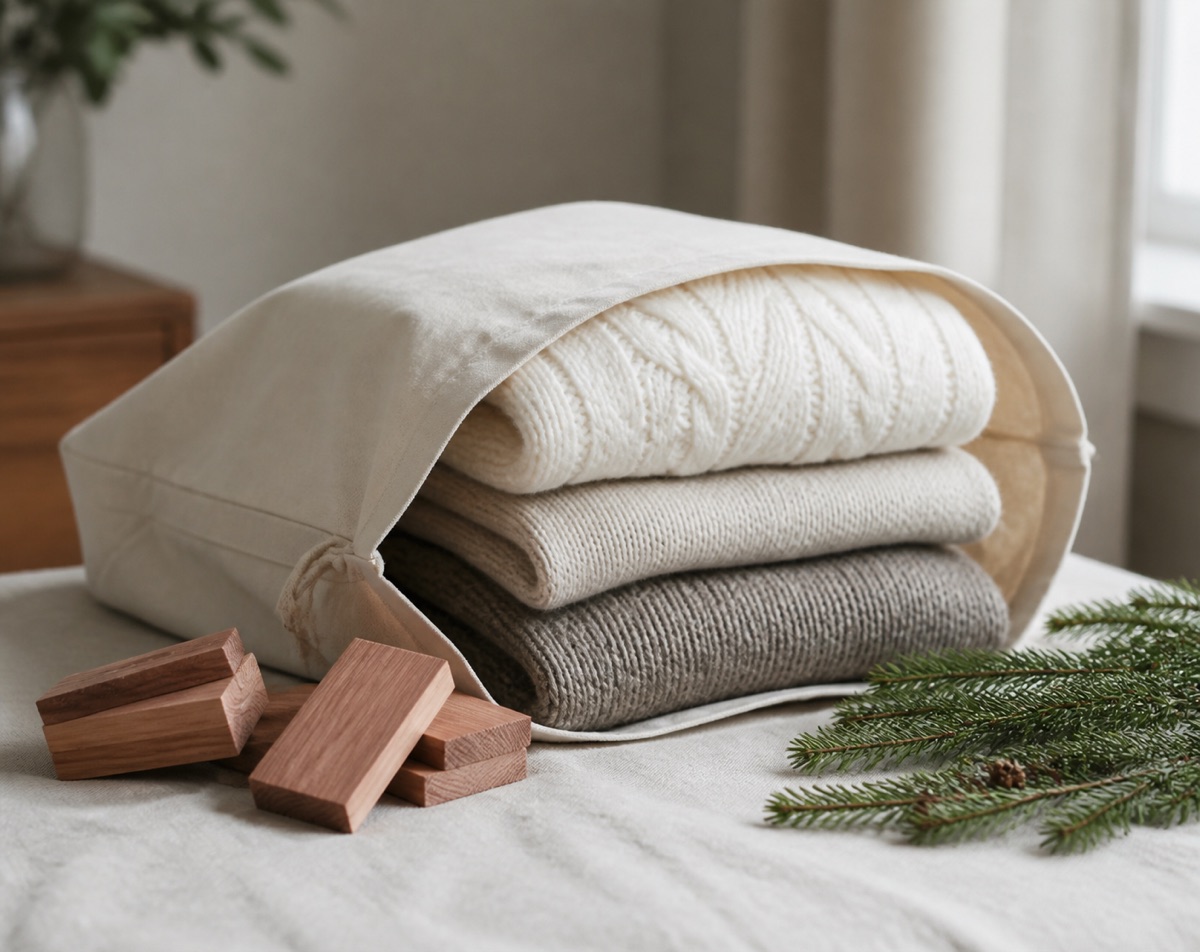
| Cotton or canvas storage bags | Best for natural fibres. Breathable, keeps dust and light off |
| Cardboard boxes with tissue | Good. Use acid-free tissue for anything valuable |
| Plastic boxes with a lid | Acceptable if the clothes are bone dry and the box is not in a damp place |
| Vacuum compression bags | Avoid for wool, down and natural fibres. Crushes loft permanently and traps any moisture present |
Vacuum bags are fine for synthetics and bedding you do not care about crushing. They are the wrong choice for a down jacket or a cashmere jumper, and the damage from long-term compression is not recoverable.
Moth control that works
- Cedar — repels, does not kill. The oils that do the work evaporate; sand the blocks lightly once a year to expose fresh wood, and replace them every few years.
- Lavender — repels, mildly. Pleasant, and it needs refreshing every few months.
- Pheromone traps — the genuinely useful tool. They catch adult males and, more importantly, they tell you whether you have an active infestation. Put one in the wardrobe permanently.
- Mothballs (naphthalene or PDB) — effective and unpleasant. They work by sublimating into a vapour that is toxic to larvae, which means they only work in a sealed container, and the odour permeates fabric and is very difficult to remove. Most people should not use them.
If you find moths
- Isolate the affected garments immediately.
- Freeze them — sealed in a bag, at −18 °C for at least 72 hours. This kills eggs and larvae, which washing at a survivable temperature does not reliably do.
- Wash or dry clean afterwards.
- Vacuum the wardrobe thoroughly, including cracks, corners and the underside of shelves, then empty the vacuum outside.
- Check everything else stored nearby. Moth damage is rarely confined to one garment.
Fold or hang
- Fold anything knitted. Hanging a jumper stretches the shoulders permanently — knit has no structure to resist its own weight.
- Hang structured items — tailored jackets, coats, dresses — on wide wooden or padded hangers. Wire hangers put all the load on two points and distort shoulders.
- Use garment bags for hanging storage, in cotton rather than plastic. Plastic garment bags trap moisture and some plasticisers can yellow fabric over years.
- Pad the folds of anything you want to keep crease-free with acid-free tissue, and refold along different lines every year or two — a permanent crease eventually becomes a weak line in the fibre.
Where to store
The requirements are cool, dark, dry and stable.
- Avoid lofts and attics — large temperature swings, and often the damp that comes with them
- Avoid basements and garages — humidity, and in many cases pests
- Avoid anywhere with direct light. UV fades and weakens fibre even through a window
- Under a bed or on top of a wardrobe in a heated room is usually the best option available in a normal house
In a damp house, add silica gel packs to the containers and replace or dry them annually.
By fabric
| Fabric | Storage notes |
|---|---|
| Wool, cashmere | Clean, folded, breathable container, moth deterrent. Never compressed |
| Down | Uncompressed above all. A large breathable sack, or hung loosely |
| Silk | Acid-free tissue, no direct light, breathable. Never plastic |
| Leather, suede | Hang on a wide hanger, breathable cover, never sealed. Needs air |
| Cotton, linen | Tolerant. Store clean and dry; heavy starch attracts insects |
| Synthetics | Very tolerant. The one group where vacuum bags are reasonable |
Bringing things back out
Air everything for a day before wearing — storage smell dissipates on its own. Steam or press out fold creases rather than ironing them flat while the garment is still cold and dry. And check for damage as you unpack, not in October when you actually need the coat.
Common questions
Are vacuum bags really that bad?
For wool, cashmere and down, yes. Compression crushes the loft and the fibres do not fully recover, and any moisture present is sealed in with no way out. They are perfectly reasonable for synthetics and spare bedding you do not mind creasing.
Do moths eat clean wool?
No — larvae are feeding on body oils, sweat and food residue, and they eat the fibre as a consequence. This is why washing before storage prevents most moth damage on its own, and why a jumper worn twice is a target even though it smells clean to you.
Are mothballs worth using?
They work, and most people should not use them. They only function in a sealed container, the vapour is unpleasant and hazardous, and the odour permeates fabric so thoroughly that it can be impossible to remove. Cedar plus pheromone traps is the better combination.
What actually kills moth eggs?
Freezing — sealed in a bag at −18 °C for at least 72 hours. Washing at a temperature the garment survives generally does not kill eggs reliably. Freeze first, then wash or dry clean, then vacuum the wardrobe thoroughly including cracks and shelf undersides.
Where is the worst place to store clothes?
Lofts and garages. Both swing widely in temperature and are usually damp, and garages add pests. Under a bed or on top of a wardrobe in a heated room is nearly always the best option available in an ordinary house.