The short answer
Chemical drain cleaner fails on exactly the blockages people buy it for: it does not touch hair mats or solid objects, it generates heat that can distort plastic waste pipe, and when it fails it leaves a trap full of caustic liquid. Work mechanically instead, escalating as needed — boiling water and dish soap for kitchen grease, then a plunger with the overflow covered, then opening the trap, then a hand auger. For showers, a barbed plastic hair-removal strip costs almost nothing and solves most blockages outright.
Chemical drain cleaner is the default response to a slow drain and it is usually the wrong one. It is corrosive to pipes and to the person using it, it frequently fails on the blockages people reach for it to solve, and when it fails it leaves a pipe full of caustic liquid that the next person to open the trap gets on their hands.
Nearly every domestic blockage responds to mechanical removal, and mechanical removal actually gets the material out rather than partially dissolving it.
Why chemical cleaners are a poor first choice
- They do not touch hair mats, which are the main cause of bathroom blockages, or solid objects
- Caustic soda generates heat, which can soften and distort plastic waste pipe and degrade old joints
- They sit in the trap if they fail, creating a chemical hazard for whoever opens it
- Never mix products. An acidic cleaner after a caustic one can react violently
- Never use them with a plunger — you will splash caustic liquid
The order to work through
1. Boiling water and dish soap — kitchen sinks
For a slow kitchen drain, the blockage is usually congealed fat. Pour a generous squeeze of dish soap down, follow with a kettle of boiling water, and wait a few minutes. The detergent emulsifies the fat and the heat mobilises it.
Not on PVC waste pipe repeatedly — very hot water can soften plastic joints over time. Very hot rather than boiling is a reasonable compromise.
2. Bicarbonate and vinegar
Half a cup of bicarbonate of soda down the drain, then half a cup of white vinegar. Cover the opening and leave 15 minutes, then flush with hot water.
Honest assessment: the fizzing is mostly theatre — the reaction neutralises itself quickly. It is mildly useful for freshening a smelly drain and useless on an actual blockage. It will not hurt anything.
3. The plunger
Underused and effective. The details that make it work:
- Use a cup plunger for sinks; the flange type is for toilets
- Cover the overflow with a wet cloth. Without this the pressure escapes and you achieve nothing — this is the most common reason plunging fails
- Ensure enough water to submerge the cup, so you are moving water rather than air
- Push and pull vigorously for 20 seconds, then break the seal sharply
4. Clear the trap
The U-bend under the sink catches nearly everything, and opening it is a fifteen-minute job.
- Bucket underneath. Not optional — it will be full of water.
- Unscrew the two collars by hand. They are usually hand-tight.
- Remove the trap, empty it, and clean it out.
- Check the pipe stubs either side with a bottle brush.
- Refit, hand tighten, and run water while watching for drips.
If the collars will not move, a pair of water pump pliers with a cloth wrapped around the plastic protects the threads.
5. A drain snake
For blockages past the trap. A hand auger — a coiled spring on a drum — is inexpensive and effective. Feed it in, crank while pushing, and when it catches, work it back and forth before withdrawing slowly. Expect what comes out to be unpleasant.
For shower and bath drains, a plastic hair-removal strip — the flexible barbed tool — costs almost nothing and is the single most effective tool for the specific problem of a hair mat at the top of a waste pipe.
6. Enzymatic maintenance
Enzyme and bacterial drain products digest organic matter over hours. They are far too slow to clear a blockage, but they are genuinely useful as monthly maintenance, and they are safe for pipes and septic systems.
Blockage by location
| Drain | Usual cause | Best approach |
|---|---|---|
| Kitchen sink | Congealed fat and food | Hot water and soap, then clear the trap |
| Bathroom sink | Hair and toothpaste with soap scum | Hair strip, then clear the trap |
| Shower or bath | Hair mat | Hair strip. Almost always sufficient |
| Toilet | Excess paper, wipes, objects | Flange plunger, then a toilet auger |
| Several fixtures at once | Main drain blockage | Stop and call a drainage engineer |
That last row matters. If more than one fixture is backing up, or if using the washing machine makes the shower gurgle, the problem is in the main drain or the sewer connection — not in any individual trap. Working on individual fixtures will not help.
Smells
A drain smell usually has one of three causes:
- A dry trap. Every waste has a water seal that blocks sewer gas. In an unused shower or basin it evaporates in weeks. Run the tap for thirty seconds — this fixes it, and it is the most common cause
- Biofilm in the pipe. Enzyme cleaner, or a brush
- A failed or missing seal — an unsealed washing machine standpipe, or a missing trap on a new installation
Prevention
- Never pour fat, oil or grease down a drain. Let it solidify and bin it. This is the single biggest cause of both household and municipal drain problems
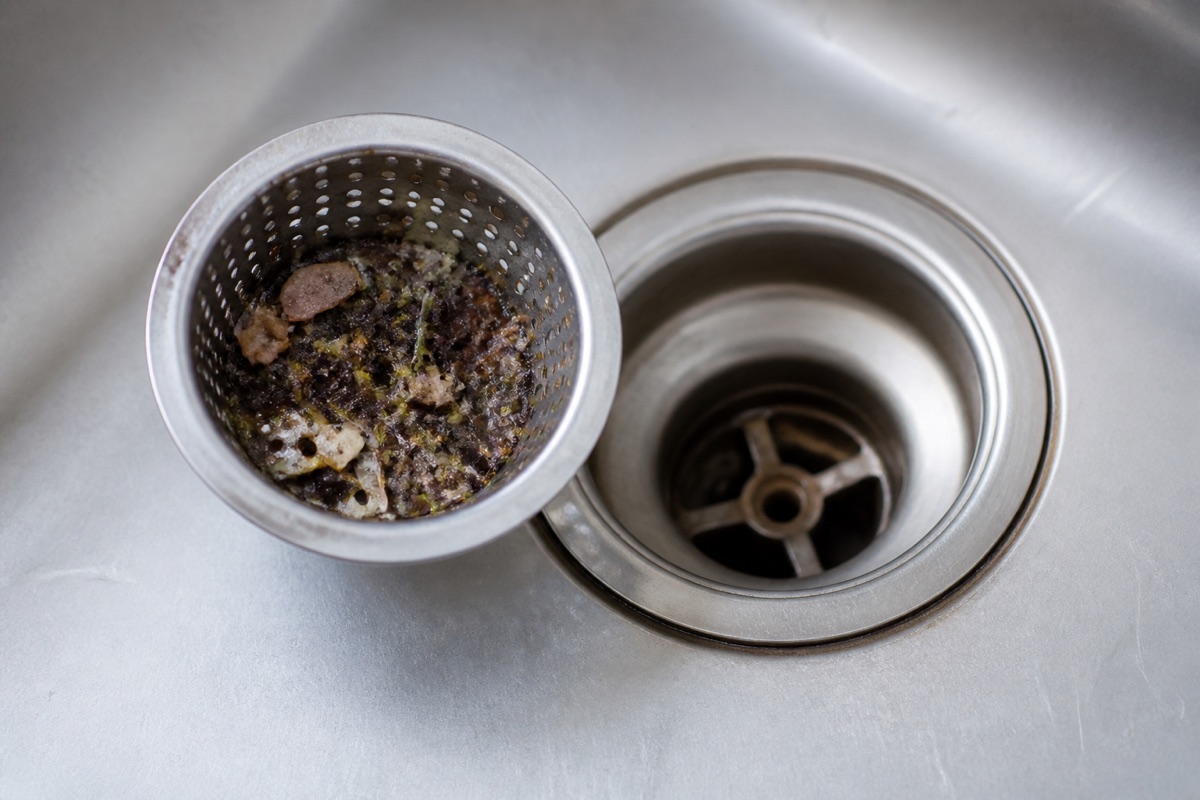
- Strainers on every drain, emptied regularly. A hair catcher in the shower prevents most bathroom blockages entirely
- Nothing but the obvious down a toilet. Wipes marked “flushable” are the leading cause of drain blockages and they do not break down
- Run hot water for 30 seconds after washing up
- Enzyme treatment monthly
- Run water in unused fixtures monthly to keep traps sealed
Common questions
Why is chemical drain cleaner a bad first choice?
It does not touch hair mats or solid objects, which are the most common domestic blockages. Caustic soda also generates heat that can distort plastic waste pipe, and when it fails it leaves a trap full of corrosive liquid for whoever opens it next.
Does the bicarbonate and vinegar trick actually work?
Barely. The fizzing is mostly theatre — the reaction neutralises itself within seconds. It is mildly useful for freshening a smelly drain and essentially useless on a real blockage. It will not damage anything, which is its main virtue.
Why does plunging never work for me?
Almost certainly because the overflow is open. Cover it with a wet cloth, or the pressure escapes through it and you achieve nothing. Also make sure there is enough water in the basin to submerge the cup, so you are moving water rather than air.
Several drains are slow at once. Is that different?
Yes, and it changes what you should do. Multiple fixtures backing up, or the shower gurgling when the washing machine drains, points to the main drain or the sewer connection rather than any individual trap. Working on individual fixtures will not help — call a drainage engineer.
What causes a drain smell in a room nobody uses?
A dry trap. Every waste has a water seal blocking sewer gas, and in an unused shower or basin it evaporates in a few weeks. Run the tap for thirty seconds. This is the most common cause and the easiest fix.