The short answer
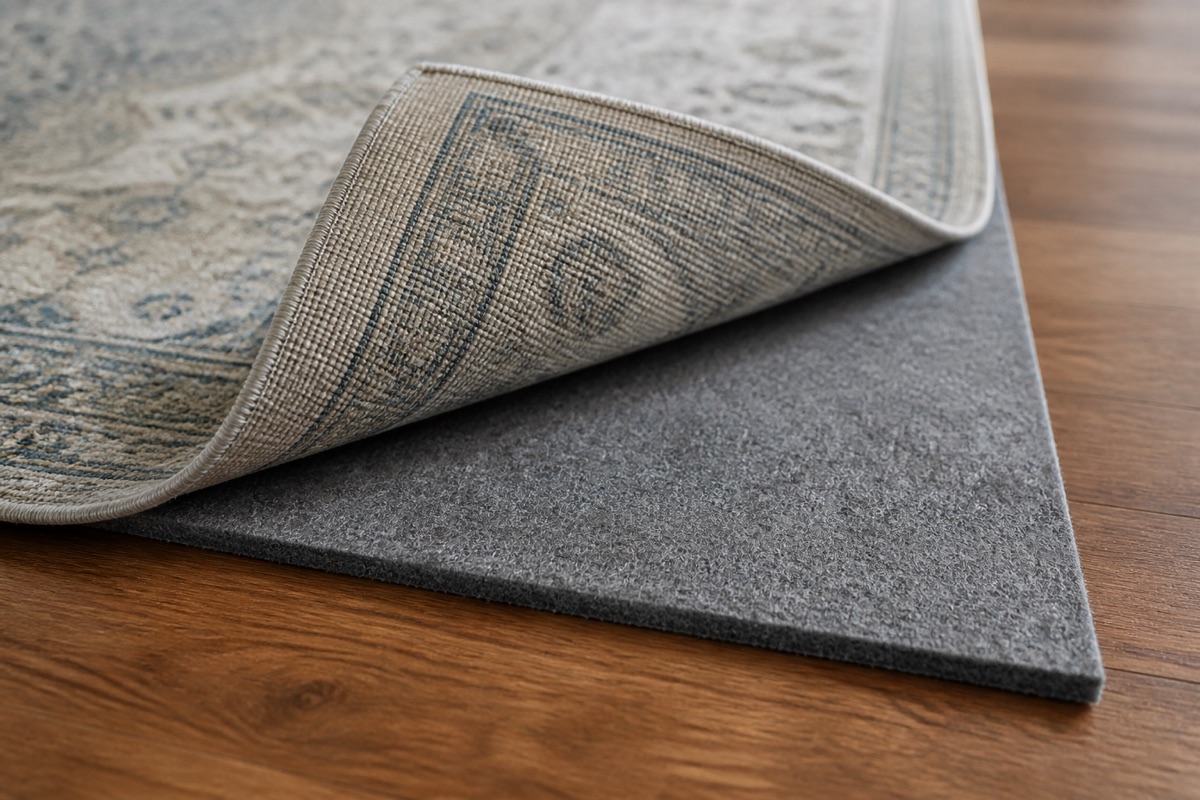
Natural rubber and felt is safe on effectively every domestic floor. The cheap open-weave PVC grid is the one that causes permanent damage: vinyl reacts chemically with it and the yellow-brown discolouration goes through the wear layer. Adhesive-backed pads are worse still. Cut the pad about 2.5 cm smaller than the rug on every side so the rug edge reaches the floor, and lift the rug twice a year to vacuum both sides and check for trapped grit. On underfloor heating, use a thin rated pad or none.
A rug pad stops a rug sliding, adds cushioning, and extends the life of the rug. It can also permanently discolour the floor underneath, and the pads most likely to do that are the cheap ones sold everywhere.
The reaction nobody warns you about
Vinyl and many floor finishes react chemically with certain rubbers and with the plasticisers used in low-cost PVC-coated pads. The result is a yellow-brown discolouration that follows the pattern of the pad, sits in the surface rather than on it, and cannot be cleaned out.
On LVP and sheet vinyl it goes through the wear layer. On polyurethane-finished wood it hazes and yellows the film. On both, the fix is replacement of the affected area.
The other failure mode is moisture. A pad with a solid, non-breathable backing traps humidity between rug and floor. On wood that causes cupping and finish damage; on any floor it grows mould in the right conditions.
Pad types, and where each is safe
| Pad type | Grip | Safe on | Avoid on |
|---|---|---|---|
| Natural rubber + felt | Excellent | Wood, laminate, LVP, tile — the safest all-rounder | — |
| Wool or recycled felt (no backing) | Low | Everything. Cushioning only | Anywhere you need grip |
| Natural rubber only | Excellent | Wood, tile | — |
| PVC / vinyl mesh (the cheap white grid) | Moderate | Nothing you care about | Vinyl, LVP, finished wood |
| Synthetic latex or SBR | Good | Tile, concrete | Vinyl, wood — degrades and stains |
| Adhesive-backed | Excellent | Nothing | Everything — residue is permanent |
The practical rule: natural rubber and felt is safe on effectively every domestic floor, and the cheap open-weave plastic grid is the one that causes the damage people write about. If a pad has no material stated, assume it is PVC.
What “non-staining” on the label actually means
It is not a regulated term. Look for the material named explicitly — natural rubber or 100% felt — rather than a marketing phrase. Reputable pads state the composition; the ones that only say “non-slip” generally do not.
For vinyl and LVP specifically, several flooring manufacturers publish approved-pad guidance in their warranty documents. It is worth two minutes to check, because using the wrong pad can void the warranty on the floor.
Sizing and fitting
- Cut the pad about 2.5 cm smaller than the rug on every side. The rug edge should reach the floor, or it lifts and becomes a trip hazard.
- Felt-and-rubber pads cut easily with scissors — measure the rug rather than trusting the stated size.
- Rubber side down, felt side up on combination pads. The rubber grips the floor; the felt lets the rug settle without abrading.
- Vacuum the floor before laying. Grit trapped under a pad is an abrasive sheet.
Maintenance most people skip
Lift the rug and pad twice a year. Vacuum both the floor and the underside of the pad, check for trapped grit, and look for any discolouration starting. Catching a reaction early sometimes means catching it before it goes through the finish.
This is also the moment to rotate the rug, which evens out both wear and sun fading.
Underfloor heating
A thick felt pad plus a dense rug insulates the floor and can push the surface temperature above the flooring manufacturer’s limit — commonly around 27 °C. On underfloor heating, use a thin pad rated for it, or none, and keep an eye on how warm the covered area runs.
Common questions
Which pad is safe on luxury vinyl plank?
Natural rubber and felt. Avoid anything PVC, synthetic latex or adhesive-backed — vinyl reacts with those and the resulting yellow-brown discolouration goes through the wear layer permanently. If the material is not stated on the label, assume it is the wrong kind.
Can I use the cheap plastic mesh pad?
Not on any floor you care about. The open-weave PVC grid is the pad most commonly implicated in staining vinyl and hazing wood finishes, and it grips poorly compared with rubber and felt anyway.
Does the pad need to be the same size as the rug?
Slightly smaller — about 2.5 cm in from each edge. That keeps the rug edge in contact with the floor rather than riding up on the pad, which is both a trip hazard and how edges get damaged.
Will a rug pad damage underfloor heating?
It will not damage the heating, but a thick pad plus a dense rug can insulate enough to push the floor surface past the covering’s temperature limit, typically about 27 °C. Use a thin pad rated for underfloor heating, or skip the pad.
How often should I lift the rug?
Twice a year. Vacuum the floor and the pad’s underside, check for trapped grit, and look for early discolouration. Rotate the rug while it is up — it evens out both wear and sun fading.