The short answer
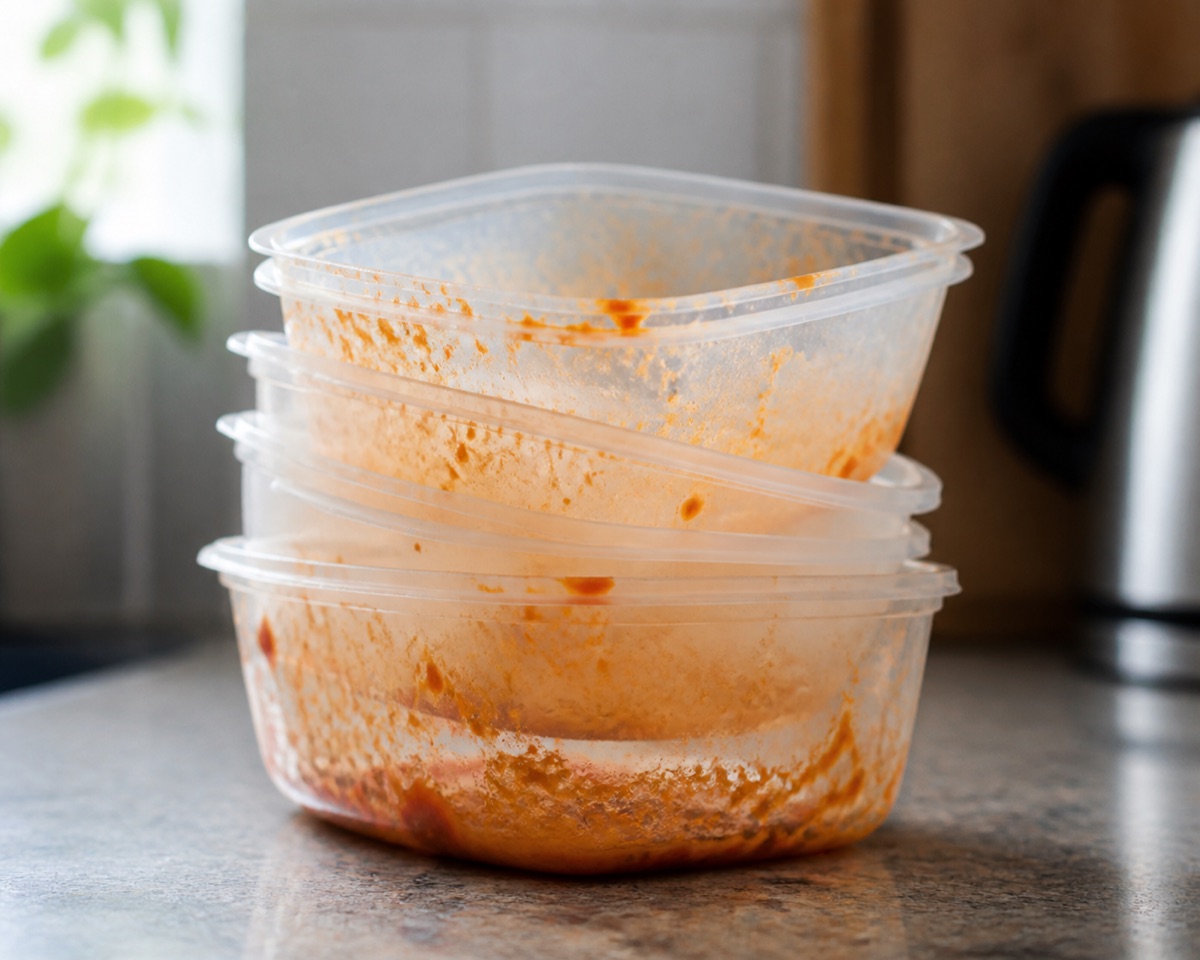
Tomato stains plastic because lycopene is fat-soluble and polypropylene is a fatty plastic, so the pigment dissolves into the surface rather than sitting on it — which is why scrubbing achieves nothing. Sunlight is the most effective removal method: wash the container and leave it outside, still damp, for a day or two. To prevent it, wipe the inside with a little cooking oil before adding tomato-based food. Warping is heat damage from the dishwasher’s bottom rack; plastics belong on the top rack, always.
Plastic food containers fail in three predictable ways: they go orange, they hold smells, and they warp until the lid no longer seals. All three are consequences of what plastic is, and two of them are largely preventable.
The orange stain
Tomato-based food stains plastic because lycopene, the pigment in tomatoes, is fat-soluble — and so is polypropylene, the plastic most containers are made from. The pigment dissolves into the surface layer of the plastic rather than sitting on it, which is why scrubbing does nothing.
What removes it
- Sunlight. The most effective and the cheapest. Wash the container, then leave it outside in direct sun for a day, ideally still damp. UV breaks down the pigment. Two days clears most staining and it costs nothing.
- Bicarbonate paste. Coat the interior, leave a few hours, scrub gently with a soft brush.
- Dilute bleach soak. One tablespoon per litre, one hour, then wash and rinse thoroughly. Effective and the most aggressive option.
What prevents it
Spray the inside with cooking oil spray before adding tomato-based food. The oil film occupies the surface the pigment would otherwise dissolve into. It works remarkably well and almost nobody does it.
Failing that, use glass for anything with tomato in it.
Smells that will not wash out
Same mechanism, different molecules — odour compounds from garlic, curry, fish and onion are also fat-soluble and absorb into the plastic.
- Bicarbonate solution soak — two tablespoons per litre of warm water, overnight.
- Crumpled newspaper sealed inside for a few days absorbs a surprising amount.
- White vinegar soak, one hour, then wash.
- Sunlight again, which helps with odour as well as staining.
A container that still smells after all of that has absorbed too much to recover. Demote it to non-food storage.
Warping
Warping is heat damage, and it is what eventually kills the seal.
- The dishwasher’s bottom rack is the main culprit. The heating element sits below it and radiant heat there far exceeds the water temperature. Plastics belong on the top rack, always.
- Microwaving fatty food creates local hotspots well above the temperature of the food overall. Fat reaches far higher temperatures than water.
- Stacking hot containers before they cool deforms the ones underneath.
Once a lid or rim has warped, the seal is gone and no amount of pressing will restore it. That is the end of the container’s useful life.
Reading the plastic
| Code | Plastic | Notes |
|---|---|---|
| 5 — PP | Polypropylene | The standard for food containers. Microwave-safe, reasonably heat-tolerant |
| 2 — HDPE | High-density polyethylene | Tough, not for microwaving |
| 4 — LDPE | Low-density polyethylene | Flexible lids and bags |
| 1 — PET | Polyethylene terephthalate | Single-use bottles. Not for reuse or heat |
| 7 — Other | Mixed | Unknown composition — check the manufacturer |
“Microwave-safe” means the container will not deform or leach at microwave temperatures. It does not mean the food heats evenly, and it does not cover fatty foods that create hotspots. When reheating anything oily, use glass or ceramic.
Lids, seals and stacking
- Store lids off, or ajar. A sealed damp container grows a musty smell within days.
- Silicone gasket lids — pull the gasket out and wash separately. The channel under it holds a black film and is the source of most container smells people cannot locate.
- Dry completely before stacking.
- Buy one system, not five. Containers that nest and share a lid size take a fraction of the cupboard space, and you stop losing lids.
Common questions
Why does tomato sauce stain plastic but not glass?
Lycopene is fat-soluble and polypropylene is a fatty plastic, so the pigment dissolves into the surface layer rather than sitting on top. Glass is non-porous and inert, so nothing penetrates. That is also why scrubbing a stained container achieves nothing.
Does sunlight really remove the orange?
Yes, and it is the most effective method available. Wash the container, leave it outside in direct sun still damp, and give it a day or two. UV breaks the pigment down. It is free and it works better than most products sold for the purpose.
How do I stop it staining in the first place?
Wipe or spray the inside with a little cooking oil before adding tomato-based food. The oil occupies the surface the pigment would dissolve into. It sounds like folk advice and it genuinely works.
Why do my containers warp in the dishwasher?
They are on the bottom rack. The heating element sits underneath and radiant heat down there is far above the water temperature. Plastics go on the top rack, without exception.
Can a container that smells be saved?
Often — bicarbonate soak overnight, then sunlight, then a vinegar soak if needed. If it still smells after all three, the odour compounds have absorbed too deeply and it is not coming back. Use it for screws.