The short answer
Work from gentlest to strongest and stop when it works: hot water and a stiff grout brush, then bicarbonate paste for 10–15 minutes, then oxygen bleach for 15–30 minutes, and only then dilute chlorine bleach. Never use vinegar on cement grout — acetic acid dissolves the cement binder and leaves it soft and powdery. On marble, limestone or travertine tile, no acid at all. Test the seal by dropping water on a grout line: if it soaks in within a minute or two, reseal.
Tile is one of the most durable surfaces in a house. Grout is not. It is a porous cement-based filler, it sits slightly below the tile face where everything collects, and it discolours from the surface down.
Which means the goal is not to attack grout harder. It is to clean it in the right order, with chemistry matched to the stain, and then to keep it sealed so it stops absorbing.
First: what kind of grout, and what kind of tile
Two facts change the method entirely.
Cement grout vs epoxy grout. Cement grout is the standard, porous, needs sealing. Epoxy grout is non-porous, does not need sealing, and does not respond to sealers at all. Epoxy has a slightly plastic sheen and is most often found in commercial installations and newer wet rooms.
Natural stone vs ceramic or porcelain tile. This one carries real risk. If your tiles are marble, limestone, travertine or any other calcareous stone, acidic cleaners will etch them permanently — and many grout cleaners are acidic. On stone, you are limited to pH-neutral or mildly alkaline products. Ceramic and porcelain tolerate almost anything.
The escalation, in order
Start at the top and stop as soon as it works. Going straight to the strongest option damages grout unnecessarily.
1. Hot water and a stiff brush
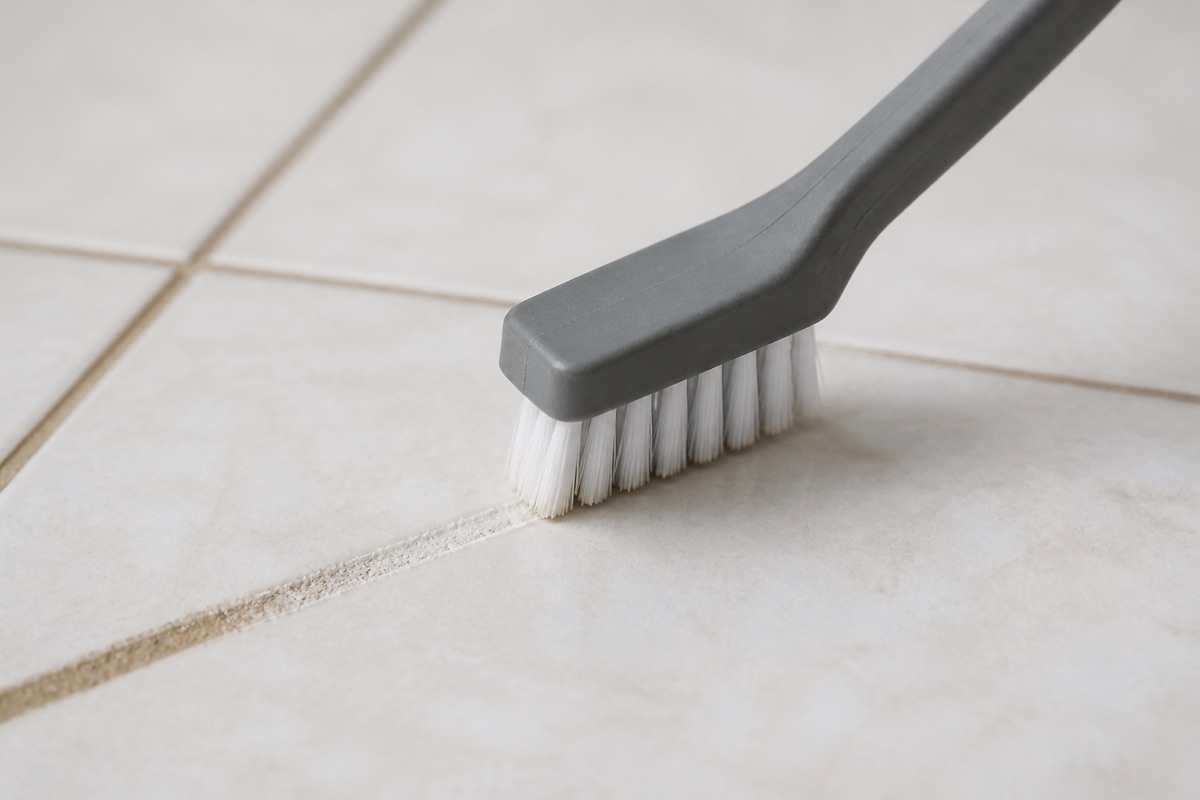
On lightly soiled grout this is genuinely enough. Use a grout brush — narrow, stiff nylon bristles — not a toothbrush, which is too soft and too small to be worth the time. Scrub along the line, rinse, and see what you have before reaching for anything else.
2. Bicarbonate paste
Mix bicarbonate of soda with water into a thick paste, work it into the grout lines, leave 10 to 15 minutes, then scrub and rinse. Mildly abrasive and mildly alkaline. Safe on stone.
3. Oxygen bleach
Sodium percarbonate, sold as oxygen bleach or colour-safe bleach. Mix per the packet, apply to the grout, and leave it 15 to 30 minutes without letting it dry out. This is the most effective option for general grey discolouration, and it is safe on stone and on coloured grout.
4. Chlorine bleach — last, and not everywhere
A 1:10 bleach-to-water solution removes mould staining that nothing else touches. It is also the most damaging option: it degrades cement grout over repeated use, will strip colour from coloured grout, and discolours some natural stone.
Never mix it with anything. Bleach plus an acidic cleaner releases chlorine gas; bleach plus ammonia releases chloramine. If you have used another product first, rinse thoroughly and ventilate before bleach goes anywhere near it.
What to avoid
- Vinegar on cement grout. It is the most-repeated grout tip online and it is wrong. Acetic acid dissolves the cement binder — it will lighten the surface by eroding it, and over repeated use the grout goes soft and powdery.
- Steam cleaners on unsealed or ageing grout. Effective, but the pressure and heat erode a weak grout line and strip any sealer present.
- Wire brushes and metal scrapers. They cut grooves that then collect more dirt.
- Any acid on stone tile. Worth repeating.
Mould versus stain
Black speckling in a shower is usually surface mould, and it responds to oxygen bleach or a dilute chlorine solution with sufficient dwell time.
Black that returns within days, or that sits in a continuous line where the wall meets the tray, is usually behind the surface — in the silicone, or in a failed seal letting water into the substrate. Cleaning it is cosmetic. The fix is to cut out the old silicone, dry the joint completely, and reseal with a sanitary-grade silicone. Grout does not belong in a corner joint where two planes meet; that movement joint should always be silicone.
Sealing
Sealer is what stops the whole cycle repeating. It does not make grout waterproof — it makes it slow to absorb, which buys you the time to wipe a spill before it stains.
Testing whether you need it
Drop water onto the grout line. If it beads and sits, the sealer is intact. If it soaks in and darkens the grout within a minute or two, it needs resealing.
Doing it
- Clean first, and let it dry completely — at least 24 hours. Sealing over damp grout traps the moisture and over dirt seals the dirt in.
- Apply with a small applicator brush or a sealer pen along the grout lines only.
- Wipe any sealer off the tile face before it dries. On polished tile a dried film leaves a haze that is difficult to remove.
- Apply a second coat after the interval on the tin, usually an hour.
- Keep the area dry for the full cure time — commonly 24 to 48 hours.
New grout must cure before sealing, typically 48 to 72 hours. Check the grout manufacturer’s figure.
How often
| Area | Reseal |
|---|---|
| Shower and wet areas | Every 6–12 months |
| Kitchen floor and splashback | Every 1–2 years |
| Low-traffic floors | Every 2–3 years |
When grout is past cleaning
Grout that is cracked, crumbling, or missing in sections is a water-ingress problem, not an appearance problem. Rake it out with a grout saw and regrout — a slow but entirely achievable job.
Grout that is sound but permanently discoloured can be recoloured with a grout colourant, which is an epoxy stain applied over the existing line. It works well, it lets you change colour, and it seals in the same step. It also has to be done thoroughly, because it shows every gap.
Keeping it clean
- A squeegee on shower walls after each use removes most of what would otherwise feed mould
- Run the extractor fan during and for 20 minutes after a shower
- Wipe kitchen floor spills before they sit
- Use pH-neutral cleaner for routine mopping — repeated alkaline or acidic cleaning is what strips sealer early
Common questions
Why is vinegar wrong for grout when it works on everything else?
Because acetic acid dissolves the cement binder. It appears to lighten grout by eroding the surface, and over repeated use the grout goes soft and powdery. It is the most repeated grout tip online and it is actively damaging on cement grout.
Is my tile safe with acidic cleaners?
Only if it is ceramic or porcelain. Marble, limestone, travertine and other calcareous stone will etch permanently on contact with acid — and many grout cleaners are acidic. On stone, restrict yourself to pH-neutral or mildly alkaline products.
The black keeps returning in the shower corner. Why?
Because it is in the silicone rather than on it, or because water is getting into the substrate behind. Cleaning is cosmetic. Cut the old silicone out, dry the joint completely, and reseal with a sanitary-grade silicone — grout does not belong in a corner joint where two planes meet.
How do I know if the grout needs resealing?
Drop water on a grout line. If it beads and sits, the sealer is intact. If it soaks in and darkens the grout within a minute or two, reseal. Test rather than working to a calendar.
Can permanently discoloured grout be saved without regrouting?
Yes, if the grout is structurally sound. A grout colourant is an epoxy stain applied over the existing line — it works well, lets you change colour, and seals in the same step. It has to be done thoroughly, because it shows every gap.