The short answer
Limescale is calcium carbonate and it dissolves in acid — so every effective descaler works the same way. Use citric acid at one tablespoon per litre for kettles and most appliances: boil, stand 20–30 minutes, then rinse and boil twice with fresh water. White vinegar works but the smell lingers. Never use vinegar in an espresso machine, where acetic acid attacks brass, aluminium and seals, and check your iron’s manual because many manufacturers void the warranty for it. Frequency follows water hardness: monthly above 120 ppm.
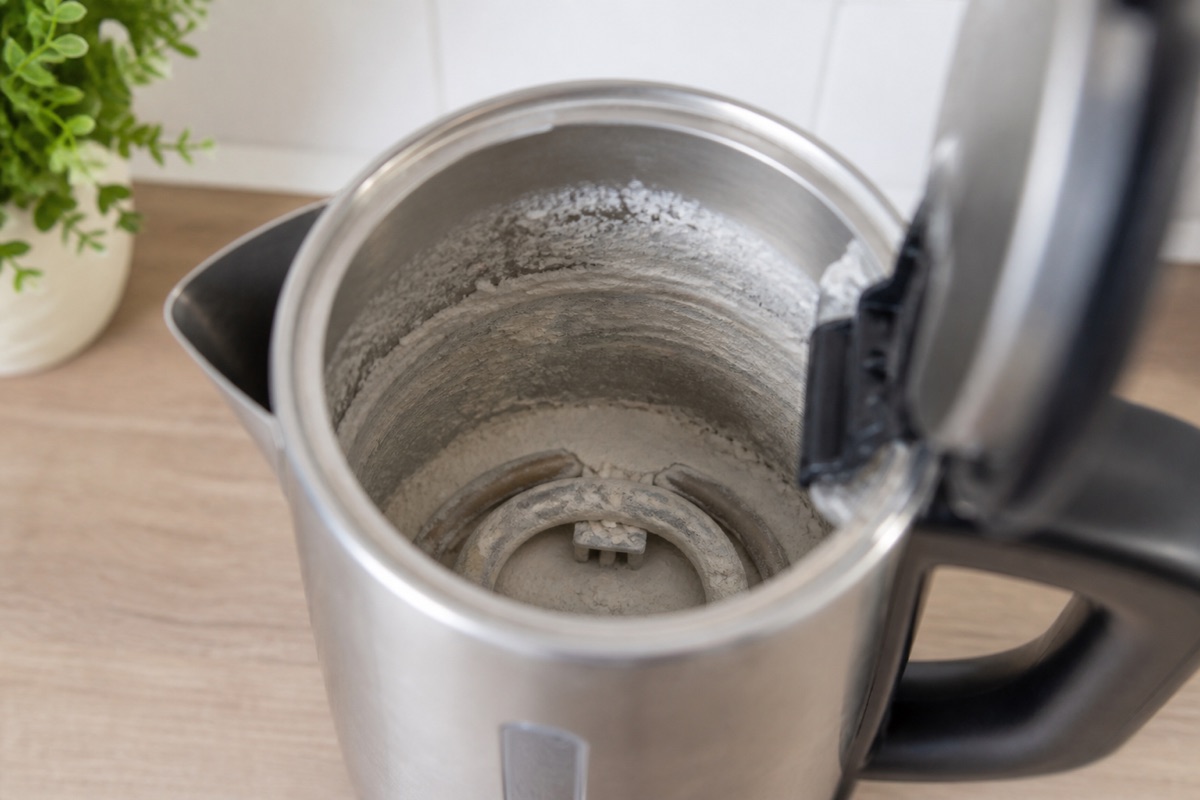
Limescale is calcium carbonate, deposited out of hard water every time it is heated. It does not damage anything quickly, but it insulates heating elements, restricts flow paths, and eventually it starts breaking off in flakes that end up in the cup.
The chemistry is simple and it dictates the method: calcium carbonate dissolves in acid. Every effective descaler — citric acid, acetic acid, sulphamic acid, lactic acid — works the same way. What differs is speed, smell, and what else the acid attacks.
Do you actually have hard water?
Hardness varies enormously by region and it determines how often any of this matters. Your water supplier publishes the figure for your postcode. As a rough guide:
| Hardness | ppm CaCO₃ | Descale interval |
|---|---|---|
| Soft | Under 60 | Every 6 months, if at all |
| Moderate | 60–120 | Every 2–3 months |
| Hard | 120–180 | Monthly |
| Very hard | Over 180 | Every 2–4 weeks |
If you have never seen a white crust in a kettle, you have soft water and most of this article is theoretical for you.
Choosing a descaler
| Agent | Strength | Notes |
|---|---|---|
| Citric acid | Good | Powder, cheap, almost odourless. The best general-purpose choice. |
| White vinegar | Moderate | Effective and universally available. The smell lingers and needs several rinses. |
| Proprietary descaler | Good | Usually sulphamic or lactic acid with corrosion inhibitors. The right choice for anything with a pump. |
| Lemon juice | Weak | Works, slowly. Sugars in the juice can leave residue. |
Never mix any of these with bleach. Acid plus chlorine bleach releases chlorine gas. If you have used bleach anywhere near the appliance, rinse thoroughly first.
Kettles
- Fill to about two-thirds with a solution of one tablespoon of citric acid per litre of water, or a 1:1 mix of white vinegar and water.
- Bring it to the boil, then switch off and leave to stand for 20 to 30 minutes. Heavy scale may want an hour.
- Pour it out. Loose flakes usually wipe away with a soft cloth or a nylon brush.
- Rinse and boil with fresh water at least twice, discarding each time.
Do not scrape a scaled element with anything metal. The scale releases with acid; the element does not recover from scratches.
Kettles with a mesh spout filter: pop the filter out and soak it separately, it holds more scale than the body.
Drip coffee makers
- Fill the reservoir with a 1:1 white vinegar and water mix, or the maker’s own descaling solution at the stated dilution.
- Run half a brew cycle, then switch off and leave 30 to 60 minutes with solution sitting in the boiler and tubing. This pause is where most of the work happens.
- Complete the cycle.
- Run two to three full cycles of clean water. Vinegar residue in a coffee maker is unmistakable and it takes more rinsing than seems reasonable.
Descale monthly in hard water, every three months in soft. The tell is a brew cycle that takes longer than it used to, or a machine that has started spluttering.
Steam irons
Irons are the one case where reading the manual first genuinely matters, because many manufacturers explicitly void the warranty if vinegar is used, and some soleplates and internal seals do not tolerate acetic acid.
If the iron has a self-clean or anti-calc function, use it — fill to maximum, heat fully, hold the iron over a sink and press the self-clean button. Scale and hot water eject through the soleplate holes. Repeat until it runs clear.
If it does not, use a descaler the manufacturer approves. The soleplate holes can be cleared with a cotton bud dipped in the solution, cold.
The prevention that works: use distilled or demineralised water if the manual permits it. Some irons are actually designed for tap water and rely on its mineral content for their anti-calc system, so this is not universal advice — check.
Espresso machines
Different rules, and worth stating plainly: do not use vinegar in an espresso machine. Acetic acid attacks the brass, aluminium and rubber seals used in boilers and group heads, and the smell is very difficult to purge from a machine with a lot of internal volume. Use the manufacturer’s descaler, or a sulphamic-acid product sold for the purpose, at the stated concentration and interval.
Shower heads and taps
Bag method: half-fill a freezer bag with descaling solution, put the shower head in it, and secure with an elastic band so the head is submerged. Leave one to two hours, then run hot water through for a minute.
Check the finish first. Chrome tolerates this well. Brushed nickel, matt black, brass and other coated finishes can be marked permanently by prolonged acid contact — test somewhere hidden, and keep contact times short.
Doing less of this
- Empty the kettle rather than leaving standing water — scale precipitates as water cools and evaporates
- Boil only what you need
- A jug water filter reduces hardness meaningfully for small appliances
- In very hard water areas a whole-house softener changes the economics of every appliance in the building, not just the kettle
Common questions
Citric acid or vinegar?
Citric acid for most things — it is cheap, effective and almost odourless, whereas vinegar leaves a smell that takes several rinses to clear. For anything with a pump, use a proprietary descaler with corrosion inhibitors instead of either.
How often do I actually need to do this?
It depends entirely on water hardness. Under 60 ppm you may never need to; over 180 ppm expect every two to four weeks. Look up the figure for your postcode once and set the interval from that rather than from a general recommendation.
Why is vinegar fine in a kettle but not an espresso machine?
A kettle is a simple stainless or plastic vessel with a heating element and it rinses out completely. An espresso machine has brass, aluminium and rubber components that acetic acid attacks, and a large internal volume that holds the smell. The same logic applies to steam irons, where many manufacturers void the warranty for vinegar.
Can I scrape the scale off instead?
Not with anything metal. Scale releases readily in acid; a heating element does not recover from scratches, and a damaged element scales faster afterwards. If loose flakes remain after descaling, a soft cloth or nylon brush is enough.
Will a filter jug stop scale forming?
It reduces hardness meaningfully for kettles and small appliances, which lengthens the interval considerably without eliminating it. In a very hard water area, a whole-house softener changes the economics for every appliance in the building, not just the kettle.