The short answer
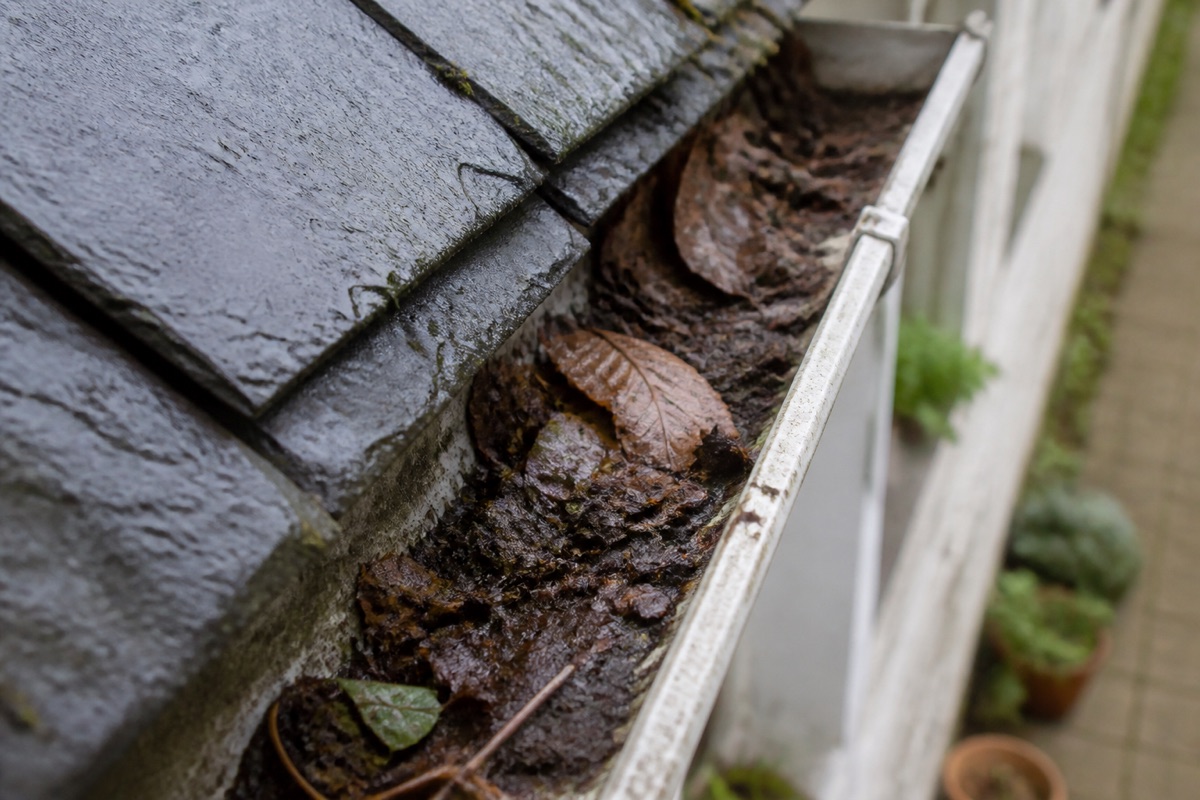
Blocked gutters do not damage gutters — they saturate the ground against your foundations, which causes settlement, damp penetration and basement flooding. Clear them annually with no trees nearby, twice a year with some, and three or four times under heavy cover, always after leaf fall is finished rather than during. Test downspouts by running a hose in the top: full flow out the bottom means clear. Discharge at least a metre from the wall. Most importantly, if the work is above single-storey height, hire someone — ladder falls are the real risk here.
Gutters fail quietly. A blocked downspout does not announce itself until water is running down a wall, into a soffit, or pooling against a foundation — and by then the damage is somewhere considerably more expensive than the gutter.
Read this first: most gutter work happens at height, and falls from ladders are one of the most common causes of serious injury in home maintenance. If your gutters are above single-storey height, if the ground is soft or sloping, or if you are working alone, hire someone. Nothing below is worth a fall.
What blocked gutters actually cause
- Water against the foundation — the expensive one. Overflowing gutters saturate the ground at the base of a wall, which causes settlement, damp penetration and, in basements, flooding
- Rotting fascia and soffit — water backing up behind the gutter sits against timber
- Damp internal walls where water runs down rendering or brickwork
- Ice damming in cold climates — meltwater backing up under roof coverings
- Pests — a gutter full of wet leaf litter is habitat
- Gutter failure — wet debris is heavy, and it pulls brackets out of the fascia
Ladder safety, briefly and seriously
- Ground must be firm and level. Use a ladder leveller on slopes, never a stack of bricks
- The 4:1 rule — the base one foot out for every four feet of height
- Extend at least three rungs above the gutter line if you are stepping off, or use a stand-off bracket
- A stand-off is worth buying — it holds the ladder off the gutter entirely, which stops you crushing it and gives you a stable working position
- Never lean sideways. Keep your belt buckle between the rails; move the ladder instead
- Have someone with you, or at least someone who knows you are up there
- Not in wind, not in wet, not near overhead cables
Doing the job
- Scoop the bulk out by hand — gloves, and a gutter scoop or a plastic trowel. Work from the end furthest from the downspout toward it, so you are not pushing debris into the outlet.
- Drop it into a bucket hooked to the ladder, not onto the ground. Retrieving wet leaf mulch off a flower bed is worse than carrying it down.
- Flush with a hose from the far end. Watch the water run — it should move steadily toward the outlet with no pooling.
- Check the fall. Standing water anywhere means the gutter has lost its slope, usually because a bracket has pulled loose. It should fall roughly 5 mm per metre toward the outlet.
Downspouts
A clear gutter feeding a blocked downspout is no better than a blocked gutter, and the downspout is where blockages usually are.
- Test it by running the hose into the top. Full flow out of the bottom means clear
- If it backs up: feed the hose down from the top, or up from the bottom, and run water while working it in and out. A drain rod or a plumber’s snake shifts a compacted plug
- Tap along the pipe to locate a blockage — the note changes where it is packed
- Check the outlet at the bottom. If it discharges into a gully, clear the gully grate and the trap beneath
Where the water goes
This matters as much as the gutter itself. Discharge should be carried at least a metre from the wall, and further on clay soils. A downspout emptying at the base of a wall is a foundation problem with a gutter attached to it. Extensions and splash blocks cost very little.
Inspecting while you are up there
- Joints and seams — leaks show as staining or a green algae streak below
- Brackets — any that have pulled away, or fascia that feels soft
- Sagging sections, which indicate a failed bracket or lost fall
- The roof edge — slipped tiles, damaged felt at the eaves
- Plant growth in the gutter, which means it has been blocked long enough to build soil
How often
| Surroundings | Frequency |
|---|---|
| No trees nearby | Annually |
| Some trees | Twice a year — spring and late autumn |
| Heavy tree cover, especially pine | Three or four times a year |
The most important clean is after leaf fall is finished, not during it. Clearing in mid-autumn simply means doing it again.
Gutter guards
They reduce the frequency of cleaning. They do not eliminate it, and the marketing usually implies otherwise.
| Type | Notes |
|---|---|
| Mesh screens | Cheap, effective against leaves. Fine debris and seeds still pass, and the mesh itself needs clearing |
| Foam inserts | Easy to fit. Degrade, and become a growing medium for seeds |
| Brush inserts | Simple. Trap debris in the brush, which then has to be pulled out and cleaned |
| Surface-tension covers | Most effective, most expensive. Can overshoot in heavy rain |
Whatever you fit, plan on an annual inspection regardless.
Repairs worth doing yourself
- Leaking joint: clean both surfaces thoroughly, dry, and apply gutter sealant. Most joint leaks are dirt, not failure
- Loose bracket: refit into sound timber. If the fascia is soft, the fascia is the job
- Lost fall: restring a line from the high end to the outlet and reset the brackets to it
Common questions
What actually goes wrong if I skip it?
The expensive failure is water saturating the ground at the base of a wall, which causes settlement, damp penetration and basement flooding. Rotting fascia and soffit come next, then the gutter itself pulling off the building under the weight of wet debris.
Do gutter guards mean I never have to clean again?
No, and the marketing usually implies otherwise. They reduce frequency. Mesh screens still pass fine debris and seeds, foam inserts become a growing medium, and brush inserts trap debris inside the brush. Plan on an annual inspection whatever you fit.
When is the best time to do it?
After leaf fall is completely finished, not during it — clearing in mid-autumn just means doing it twice. With heavy tree cover, add a spring clean for seeds and blossom.
How do I know whether the downspout is blocked?
Run a hose into the top and watch the bottom. Full flow means clear. If it backs up, tap along the pipe — the note changes where debris is packed. A drain rod or a hose fed up from the bottom usually shifts it.
Where should the downspout discharge?
At least a metre from the wall, and further on clay soils. A downspout emptying at the base of a wall is a foundation problem with a gutter attached to it, and extensions cost very little.