The short answer
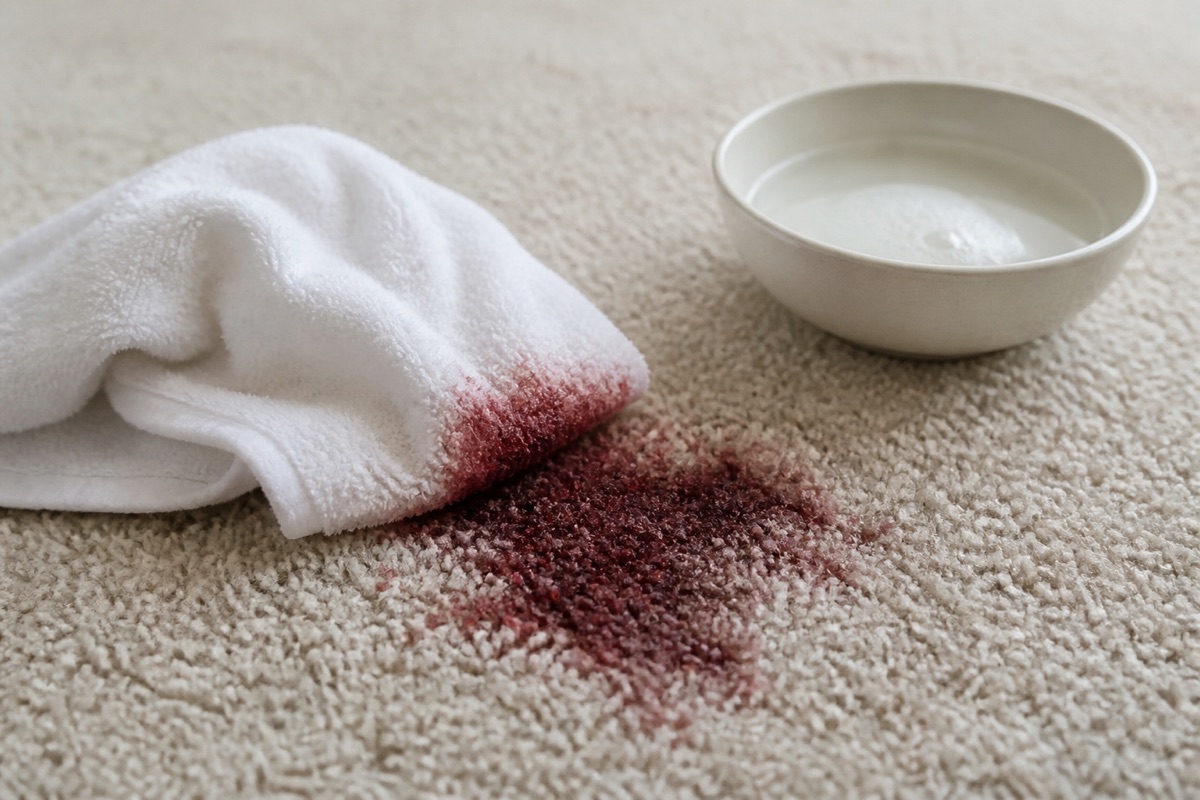
Blot, never rub, and work from the outside of the mark inward. Cold water first on anything that might be protein — blood, milk, egg — because heat sets it permanently. Match the treatment to the stain type rather than reaching for one product: detergent solution for water-based spills, dish soap for grease, isopropyl alcohol for ink, enzymatic cleaner for pet urine. The step people skip is the rinse: blot with plain water several times, then weight a pad of paper towels on the spot for hours so residue is drawn up rather than wicking back.
Most carpet stains are made permanent by the response, not by the spill. Three mistakes account for the majority: rubbing instead of blotting, using hot water on protein, and applying so much solution that the stain is pushed into the backing where it wicks back up for weeks.
The four rules
- Act immediately. Nearly everything comes out in the first few minutes and almost nothing comes out after a month.
- Blot, never rub. Rubbing drives the substance deeper and permanently distorts the pile — the fuzzy patch left behind is often more visible than the stain would have been.
- Work inward from the edge. Outward strokes spread a small stain into a large one.
- Test first. Every solution, in a wardrobe or under a sofa, before it goes on a visible area.
Know your fibre first
This determines what is safe.
| Fibre | Notes |
|---|---|
| Nylon | Durable, resilient, takes most treatments |
| Polyester / PET | Stain-resistant to water-based spills, but oil-loving — grease is its weakness |
| Olefin / polypropylene | Bleach-safe, but attracts oil badly |
| Wool | Never use alkaline cleaners, oxygen bleach or high heat. Wool is protein — it is damaged by the same things that damage hair |
Wool is the one to be careful with. An alkaline spot cleaner will strip its natural lanolin and leave a permanently rough, dull patch.
The two base solutions
Detergent solution: a quarter teaspoon of clear, dye-free dish soap in a cup of warm water. Handles most water-based stains.
Vinegar solution: one part white vinegar to two parts water. Good for alkaline residue, coffee and light pet stains. Not on wool without testing.
Keep both weak. Detergent residue left in carpet acts as a magnet for soil, and a “clean” spot that turns into a dark circle three weeks later is almost always leftover soap.
Stain by stain
| Stain | Method |
|---|---|
| Red wine | Blot hard. Cover with salt or bicarbonate to absorb. Then detergent solution, blotting repeatedly. Do not add hot water |
| Coffee, tea | Blot, then detergent solution, then vinegar solution. Repeat rather than escalate |
| Blood | Cold water only. Heat sets protein permanently. Blot with cold water, then a drop of ammonia in cold water (never on wool) |
| Grease, oil, butter | Scrape solids. Cover with cornflour or bicarbonate, leave 15 minutes, vacuum. Then dish soap solution — soap is a degreaser |
| Ink | Isopropyl alcohol on a white cloth, dabbed. Never poured |
| Chewing gum, wax | Ice in a bag until brittle, shatter and pick out. For wax, brown paper and a warm iron to wick it up |
| Mud | Let it dry completely, then vacuum. Treating wet mud makes it far worse |
| Pet urine | Blot as much as possible, then an enzymatic cleaner. Nothing else breaks down the uric acid crystals that cause the recurring smell |
| Pet vomit | Remove solids, blot, enzymatic cleaner |
| Candle wax | Brown paper over the wax, warm iron on top, move the paper as it absorbs |
| Nail polish | Non-acetone remover on a cloth, dabbed, testing first. Acetone dissolves some carpet fibres |
Finishing the job properly
The step people skip is rinsing. After the stain is gone, blot with plain water several times to remove all cleaning solution, then blot dry.
Then deal with wicking. Place a thick pad of white paper towels over the damp spot, weight it with something heavy, and leave it for several hours. This draws remaining moisture and residue up out of the backing instead of letting it travel back to the surface as it dries — which is exactly what causes a stain to reappear two days later.
Speed the drying with a fan. Damp carpet backing is where mould starts.
When it comes back
A returning stain means the substance is still in the backing or the underlay. Repeat the treatment and be much more thorough about the rinse and the weighted blot. If it returns a third time, the underlay is saturated and no amount of surface treatment will fix it — that is a job for hot water extraction, or in the case of a large pet accident, replacement of the underlay in that area.
Prevention that is worth the effort
- Vacuum properly and often. Most of what makes carpet look old is embedded grit abrading the fibres, not staining
- Mats at every door
- A carpet protector treatment after professional cleaning, reapplied every year or two
- Keep a spill kit — white cloths, a spray bottle of detergent solution, and paper towels — somewhere you can reach in twenty seconds. The whole game is response time
Common questions
Why does the stain keep coming back after a few days?
Wicking. The substance is still in the backing or underlay, and as the area dries it travels back up to the surface. The fix is a thorough plain-water rinse followed by a weighted stack of white paper towels left on the spot for several hours, which draws the residue out rather than letting it return.
Is club soda actually better than water?
Not meaningfully. The carbonation does nothing useful and the sodium content can leave its own residue. Cold water and prompt blotting achieve the same result, and a weak detergent solution does more.
What is the one thing I should never do?
Rub. It drives the substance deeper into the pile and permanently distorts the fibres, leaving a fuzzy patch that is often more visible than the stain would have been. Blot, always, working from the outside of the mark inward.
Are oxygen bleach products safe on all carpet?
Not on wool. Wool is a protein fibre and oxygen bleach damages it, as does alkaline detergent and high heat. On nylon, polyester and olefin, oxygen bleach is generally fine — test in a wardrobe first regardless.
Does a stain protector treatment actually work?
Yes, and it is the most useful thing you can do after a professional clean. It does not repel everything, but it keeps spills sitting on top of the fibre for long enough to blot them, which is the entire game. Reapply every year or two.