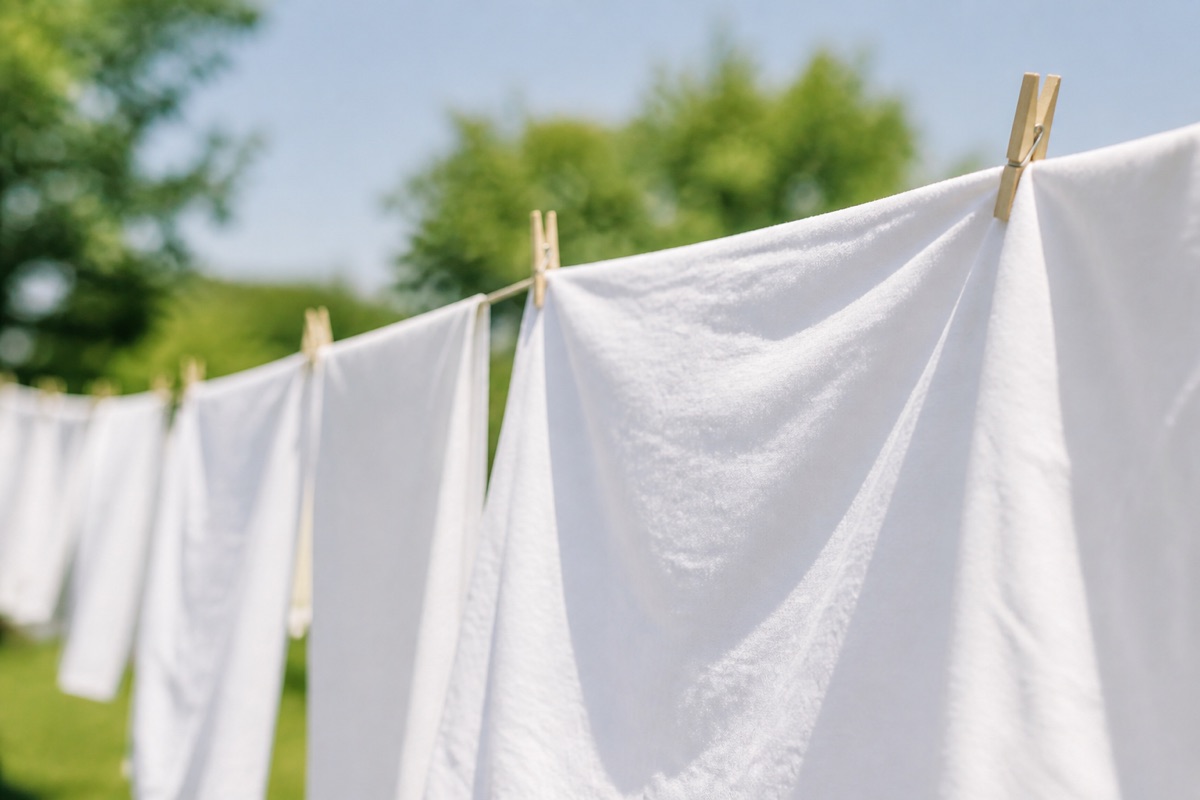
The short answer
The lint in a dryer filter is fabric — short fibres pulled out of the weave by heat and tumbling — which is the clearest evidence of what a dryer costs a garment. Line drying causes no fibre loss and no heat damage, but leaves fabric stiff without tumbling. The practical split: line dry anything with elastane, always; tumble dry towels and down, where tumbling genuinely improves the result; and finish line-dried towels with ten minutes in the dryer. Drying indoors releases one to two litres of water per load into the room.
The lint filter in a tumble dryer is the clearest evidence of what drying does to clothes. That lint is fabric — short fibres pulled out of the weave by heat and tumbling. Every cycle removes a little more, and over the life of a garment it adds up to visible thinning.
That is the case against the dryer. There is also a case for it, and neither method is right for everything.
What tumble drying does to fabric
- Fibre loss. Mechanical agitation breaks short fibres free. This is the lint, and it is why towels and t-shirts thin over years.
- Elastic degradation. Heat is the enemy of elastane. Waistbands, sock cuffs and activewear lose their recovery far faster in a dryer than on a line.
- Shrinkage. Most shrinkage in cotton happens in the dryer, not the wash — heat relaxes the tension put into the yarn during spinning.
- Setting stains. Heat makes a removable stain permanent. Always check before a garment goes in.
- Melting and glazing. Synthetics can shine or stiffen on a high setting.
What line drying does
- No fibre loss, no heat damage. Clothes measurably last longer.
- Sunlight bleaches and disinfects. UV fades stains on whites — it is genuinely effective on turmeric and on baby-food marks — and reduces surface bacteria.
- Stiffness. Without tumbling, fibres dry lying flat. Towels line-dried in still air feel like cardboard.
- Fading. The same UV that bleaches whites fades colours. Dry darks inside out, and in shade.
- Pollen and weather dependence. A real constraint for allergy sufferers and for half the year in many climates.
By fabric
| Fabric | Best method | Why |
|---|---|---|
| Cotton t-shirts, shirts | Line, or dryer on low | Shrinkage and thinning are heat-driven |
| Towels | Dryer, low, with dryer balls | Tumbling is what makes them fluffy and absorbent |
| Bedding | Either | Line-dried sheets are crisper; dryer is faster |
| Denim | Line, inside out | Heat shrinks and fades it fast |
| Wool | Flat, never a dryer | Heat plus tumbling equals felting |
| Activewear, elastane | Line, always | Heat destroys elastic recovery and wicking |
| Silk | Flat or hang in shade | Heat and UV both damage it |
| Down | Dryer, low, with balls | Only mechanical action breaks up clumped down |
| Bras and delicates | Line | Heat kills the elastic; hooks catch in a drum |
Getting more out of the dryer
- Use the lowest heat that works. Time is cheaper than fabric.
- Use a moisture sensor cycle rather than a timer if you have one. Over-drying causes most heat damage, and a timed cycle over-dries by definition.
- Do not overload. Clothes need room to tumble; a packed drum dries unevenly and takes far longer.
- Wool dryer balls cut drying time, reduce static, and soften without the residue fabric softener leaves.
- Take things out slightly damp and hang them for the last 10%. Shirts come out with far fewer creases.
- Clean the lint screen every load, and the whole vent path annually. A restricted vent means longer, hotter cycles — the exact conditions that damage fabric.
Getting more out of the line
- Shake each item hard before hanging. This is what reduces stiffness and creasing, and it takes two seconds.
- Hang shirts on hangers and trousers by the waistband — much less ironing afterwards.
- Peg towels along the long edge, not by a corner, so they do not distort.
- Turn darks inside out and dry them in shade.
- Give whites the sun — deliberately, for stains.
- A high spin in the machine is the cheapest drying you will ever do. 1400 rpm rather than 800 can halve line drying time.
Drying indoors, and the thing to be careful about
Indoor airers work, but a full load releases one to two litres of water into the air of a room. In a well-insulated house with the windows shut, that moisture has to go somewhere, and where it goes is the coldest surface — a window reveal, a corner of an external wall, behind a wardrobe. Condensation and mould in a bedroom is frequently traced back to laundry dried in it.
If you dry indoors: use a room you can ventilate, open a window or run an extractor while it dries, and run a dehumidifier if you have one. Do not dry laundry in a bedroom with the door shut.
The hybrid that works
Most households land here: line dry when weather allows, use the dryer for towels and bedding where tumbling genuinely improves the result, and always line dry anything with elastane. Finish line-dried towels with 10 minutes in the dryer to soften them — that gets most of the fabric-life benefit with none of the cardboard.
Common questions
Is the lint in the filter really my clothes?
Yes — it is short fibres pulled out of the weave by heat and tumbling. That is the clearest evidence of what a dryer costs a garment, and it is why line-dried clothes measurably outlast tumble-dried ones.
How do I get soft towels without a dryer?
Line dry them and finish with ten minutes in the dryer. That gets almost all of the fabric-life benefit of line drying and all of the softness that comes from tumbling. Shaking each towel hard before hanging also makes a noticeable difference.
Why is my activewear ruined after a year?
Most likely the dryer, and fabric softener. Heat destroys elastane recovery, and softener coats synthetic fibres in a waxy layer that kills wicking and seals in body oils. Line dry technical fabrics, always, and never soften them.
Is drying laundry indoors bad for the house?
It can be. A full load releases one to two litres of water into the air, and in a sealed room that moisture condenses on the coldest surface — a window reveal or an external wall corner. Mould in a bedroom is frequently traced to an airer in it. Ventilate the room while it dries.
Does a higher spin speed really help?
Substantially. Spinning at 1400 rpm rather than 800 removes far more water mechanically, which can halve line drying time and cut dryer time significantly. It is the cheapest drying you will ever do, and it costs the fabric far less than heat does.