The short answer
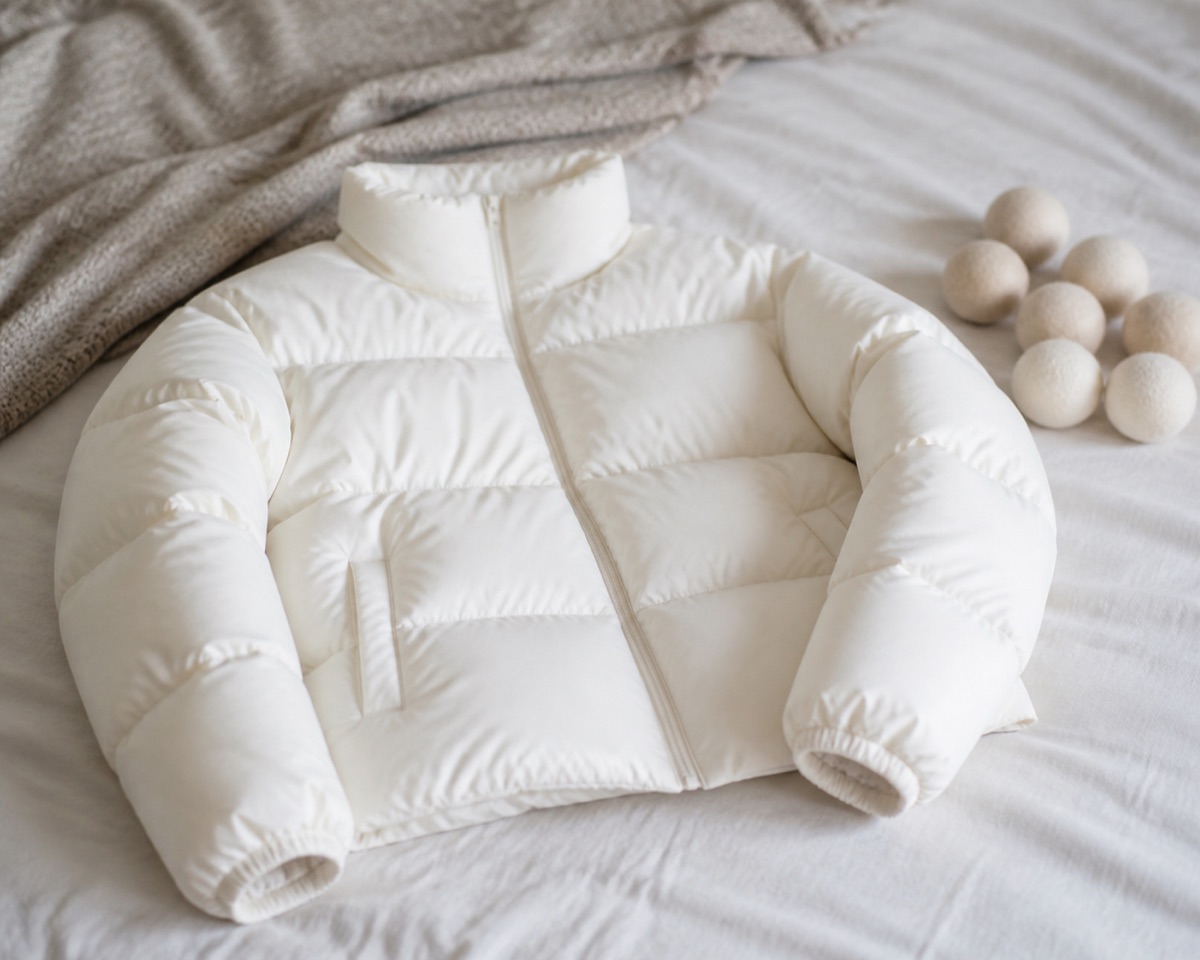
Down can be washed at home; the drying is what people get wrong. Use a down-specific detergent, never ordinary detergent and never fabric softener, and run two extra rinse cycles because residual detergent is what stops loft returning. Then tumble dry on low with three or four dryer balls for two to four hours, stopping every 30 minutes to break clumps apart by hand. Air drying alone does not work — without mechanical agitation the down dries matted and can go mildewy inside the baffles.
Down loses its warmth when it is dirty, and most people delay washing a down jacket for years because they are afraid of ruining it. The irony is that the delay is what ruins it: body oils and dirt coat the down clusters, they stop lofting, and a jacket that has lost its loft has lost most of its insulation.
Down can be washed at home. It just cannot be washed like anything else, and the drying is the part that matters.
How down works, and why loft is everything
Down insulates by trapping air in the three-dimensional structure of its clusters. Warmth is a direct function of how much air those clusters hold — the loft. Dirt, oil and detergent residue make the clusters collapse and clump, and a collapsed cluster traps nothing.
This is why the correct detergent matters: ordinary detergent strips the natural oils in the down and leaves residue on it, and both flatten loft permanently over repeated washes.
Before you wash
- Check the care label. Most modern down is machine washable; some vintage and some fashion pieces are not.
- Close all zips and fasten Velcro so they cannot catch the shell.
- Turn it inside out if the label suggests it.
- Repair any tears first with fabric repair tape. A small hole becomes a large one, and down escaping in a washing machine is a mess in every sense.
- Pre-treat cuffs and collar — where body oil concentrates — with a little down wash worked in by hand.
Washing
Use a front-loading machine. A top-loader with a central agitator will tear baffles. If you only have one, use a laundrette.
- Down-specific detergent. Nikwax Down Wash, Grangers, or an equivalent. Not ordinary detergent, not wool detergent, and never fabric softener — softener coats the down and destroys loft permanently.
- Gentle or delicate cycle, 30 °C.
- Run two extra rinse cycles. Residual detergent is the single most common cause of a jacket that will not re-loft. This step is not optional.
- Spin gently, 400–600 rpm, and run the spin twice. Removing water mechanically saves hours of drying, and drying time is where things go wrong.
- Support the whole jacket when you lift it out. Wet down is heavy and concentrated in the bottom of the baffles; picking it up by one shoulder can tear internal seams.
Drying — the part that actually matters
A wet down jacket is a clump of matted feathers. Drying is the process of breaking those clumps up, and it takes far longer than seems reasonable.
- Tumble dry on LOW heat. High heat melts synthetic shell fabrics and damages the down.
- Add three or four clean tennis balls or wool dryer balls. They beat the clumps apart as the drum turns. Without them, the down dries as a solid mass and stays that way.
- Expect two to four hours. Not twenty minutes.
- Stop every 30 minutes, take the jacket out, and break up any remaining clumps by hand. This is tedious and it is what separates a jacket that recovers full loft from one that does not.
- Dry it completely. Any residual damp in the down will go musty and can develop mildew inside a baffle where you cannot reach it. When you think it is dry, give it another 30 minutes.
Air drying alone does not work for down. Without mechanical agitation the clusters stay matted, and the extended drying time invites mildew. If you have no dryer, use a laundrette dryer for this step even if you washed at home.
Restoring loft on a jacket you have not washed
If a jacket has gone flat but is not dirty, a short cycle in a dryer on low with dryer balls — 20 to 30 minutes — often restores a surprising amount of loft on its own. Compression during storage is a common cause of flatness and it is fully reversible.
Duvets
Same principles, larger problem. The critical constraint is drum size: a down duvet must be able to tumble freely, both washing and drying. A king-size duvet in a domestic machine will not, and washing it in one produces a sodden mass that will not dry.
Use a commercial machine at a laundrette for anything larger than a single. Expect drying to take three to five hours with regular breaking-up.
Water repellency
Most down jackets have a DWR — durable water repellent — finish on the shell. It wears off, and when it does the shell wets out, the down behind it gets damp, and the jacket stops insulating in exactly the conditions you need it.
Washing removes what remains of the old DWR. Restore it with a wash-in or spray-on proofer after washing, then apply low heat in the dryer for 20 minutes — most DWR treatments need heat to cure.
Test: sprinkle water on the shell. It should bead. If it soaks in and darkens the fabric, it needs re-proofing.
How often, and how to store
- Wash once or twice a season with regular use, or when loft is visibly reduced
- Store uncompressed — hung loosely, or in a large breathable storage sack. Long-term compression in a stuff sack permanently damages the down. This is the most common storage mistake
- Store dry and clean. Body oils left on down through a summer degrade it
Common questions
Can I air dry a down jacket instead of tumble drying?
Not successfully. Without mechanical agitation the wet clusters dry as a matted mass and stay that way, and the extended drying time invites mildew inside the baffles. If you have no dryer, use a laundrette dryer for this step even if you washed at home.
Why does it take so long to dry?
Because drying is not just removing water — it is breaking up clumped down. Expect two to four hours on low heat with dryer balls, stopping every 30 minutes to break up remaining clumps by hand. That tedious part is what separates full loft recovery from a jacket that stays flat.
Is fabric softener really that bad for down?
Yes. It coats the down clusters in a waxy layer that permanently destroys their ability to loft, which is the entire source of the insulation. Use a down-specific wash and nothing else, and run two extra rinse cycles to clear all detergent.
My jacket wets out in rain. Is the down finished?
Probably not — it is the DWR finish on the shell that has worn off. Sprinkle water on it: if it soaks in and darkens rather than beading, re-proof with a wash-in or spray-on product and apply low heat in the dryer for 20 minutes, since most DWR treatments need heat to cure.
How should I store it in summer?
Uncompressed — hung loosely or in a large breathable sack, never in a stuff sack. Long-term compression permanently damages down, and it is the most common storage mistake. Store it clean, too, since body oils left on down through a summer degrade it.